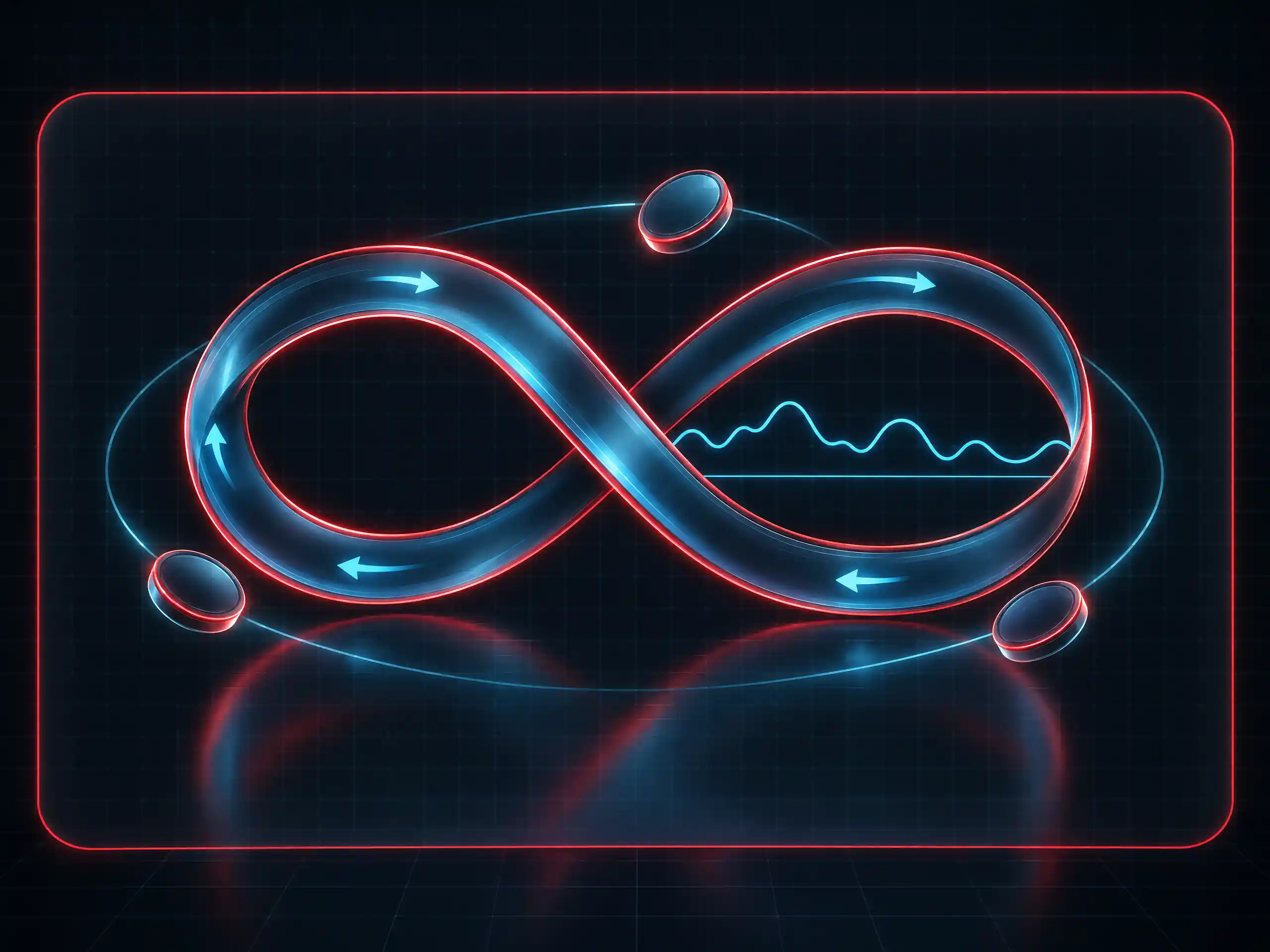
Perpetual futures are crypto contracts with no end date. You trade a coin's price using leverage, and you never own the coin.
Quick summary
- A futures contract is an agreement based on a coin's price. You don't receive the coin.
- A perpetual contract has no end date. You can keep it open until you close it, or until the platform closes it for you.
- A long position aims to gain if the price rises. A short position aims to gain if the price falls. You lose if the price moves the other way.
- Funding is a payment between traders. It helps keep the contract price close to the coin's real price.
- Perpetual futures use leverage and carry a high risk of losing money. You don't need them to trade crypto.
What is a futures contract?
A futures contract is an agreement based on the price of a coin.
You don't receive the coin. Your result depends on how the price moves between opening and closing your trade.
A position is a trade you have open.
In spot trading, you buy the coin and own it. With futures, you hold a contract instead.
Learn more in our guide to spot vs futures vs CFDs.
What does "perpetual" mean?
"Perpetual" means the contract has no end date.
Standard futures contracts expire on a set date, and then the trade ends. A perpetual contract doesn't.
Without an end date, the contract price can drift away from the coin's real price. Platforms use funding payments to fix this. More on those below.
What are margin and leverage?
Leverage lets you open a position bigger than the money you put up. It's shown as a number, like 5x.
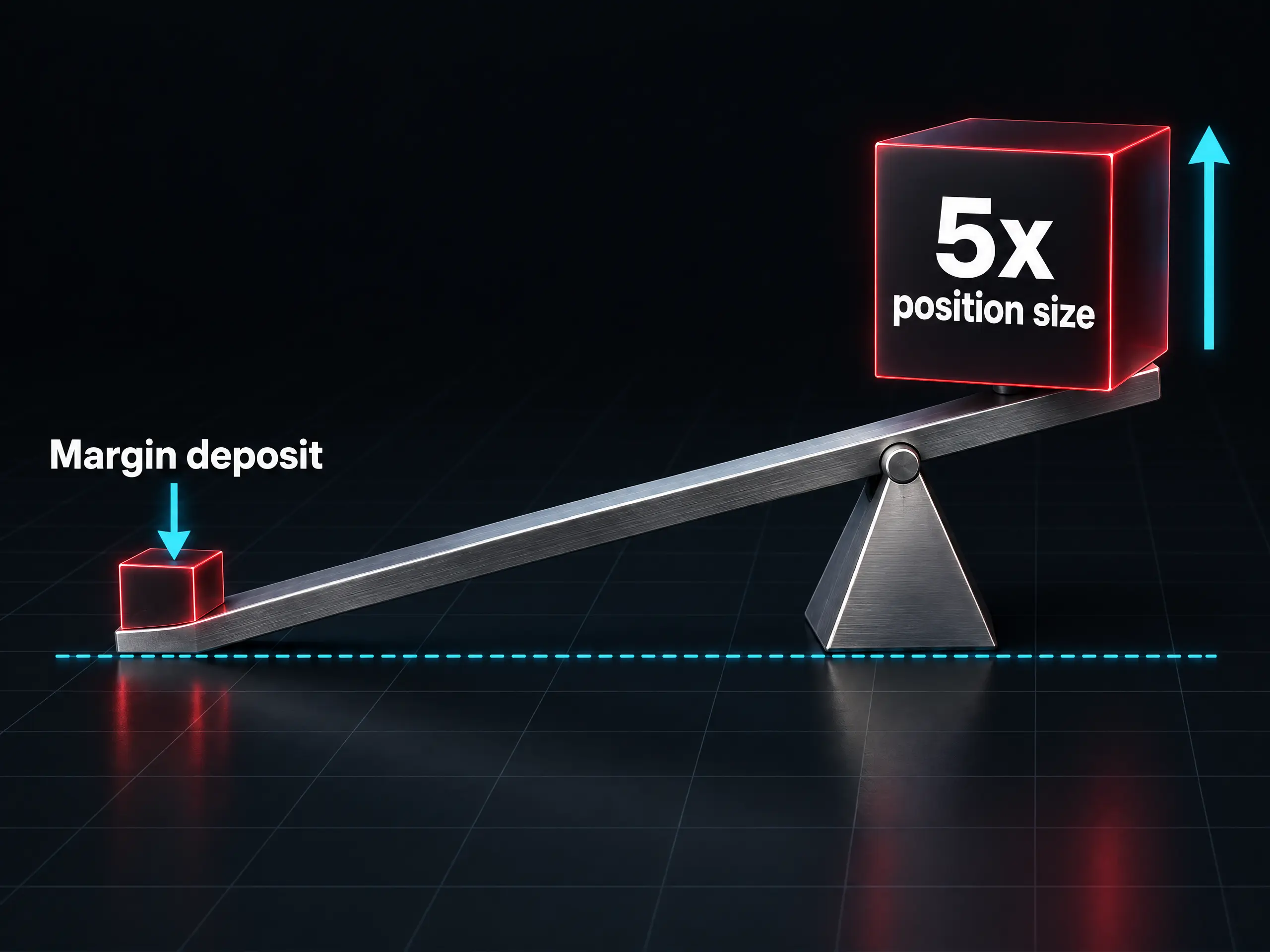
Margin is the money you put up to open the position. Think of it as a deposit. It also acts as a cushion for your losses.
Position size = margin × leverage
Example: 100 USDT of margin at 5x gives you a 500 USDT position.
Many crypto perpetual contracts are USDT-margined. That means you put up USDT, and your gains and losses are counted in USDT.
Leverage multiplies your gains and your losses by the same amount. If your margin runs too low, the platform closes your position automatically. This is called liquidation.
Learn more in our guide to leverage and margin.
Long and short positions
You can open a position in two directions:
- Long: aims to gain if the price rises. You lose if it falls.
- Short: aims to gain if the price falls. You lose if it rises.
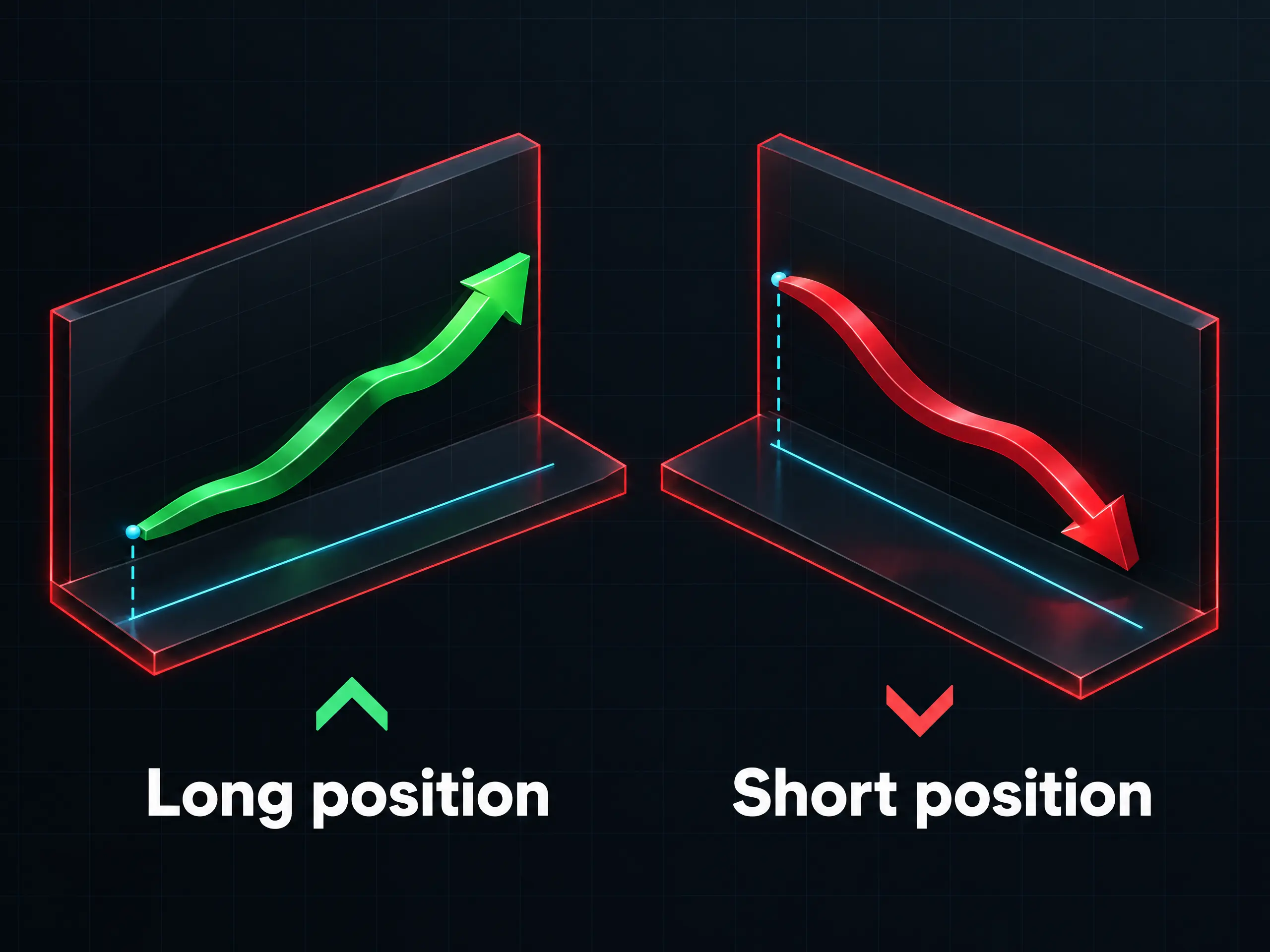
You can open a short without owning the coin. A short isn't a safer way to trade, because you can lose in either direction.
Why does funding exist?
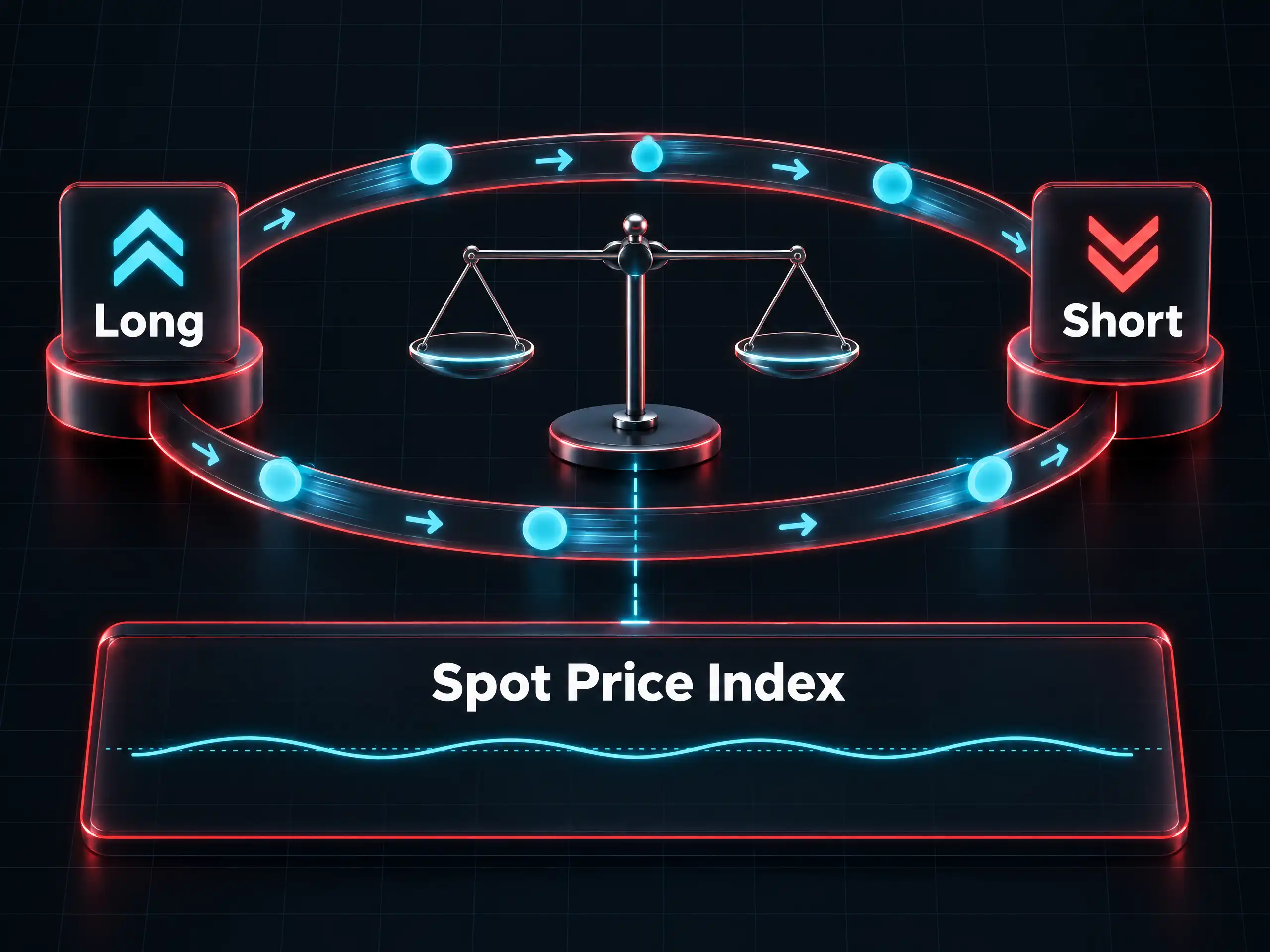
Perpetual contracts have no end date. Funding payments keep their price close to the coin's real price.
- A funding payment goes between traders. It isn't a trading fee.
- When the rate is positive, longs usually pay shorts.
- When the rate is negative, shorts usually pay longs.
- Payments happen at set times, such as every few hours.
If you hold a position for a long time, funding can add up. It can be a cost or a small credit.
What can go wrong?
- Fast losses. A small price move can use up a large part of your margin.
- Forced closing. You can be liquidated at a moment you didn't choose, even if the price recovers later.
- A worse price than expected. In a fast market, your trade can close at a worse price than you saw. This is called slippage.
- Costs that build up. Fees and funding can add up while you hold.
- Overconfidence. A few good trades can tempt you into higher leverage, which makes the next loss bigger.
- Adding money to a losing trade. This puts more of your money at risk on the same idea.
- Watching too little. Crypto trades day and night. Your position can change while you sleep.
Questions to ask yourself first
This guide can't tell you whether perpetual futures are right for you. These questions can help:
- Can I explain leverage, margin, liquidation and funding in my own words?
- Do I know the price at which my position would be closed? Could I find it on screen?
- If I lost all of my margin, would it harm my finances?
- Do I know what I'd pay in fees and funding if I held this position for a week?
- Do I have a plan for when I can't watch the position?
- Am I trading because I have a plan, or because I want to recover a loss?
If you answered "no" or "not sure" to any of these, keep learning or stick with spot trading for now.
You don't need futures to trade crypto. They may also not be available in your country, so check availability first.
Risk reminder
Perpetual futures use leverage and carry a high risk of losing money.
Losses can be bigger and faster than you expect. Your position can also be closed automatically through liquidation.
Fees and funding can reduce your result, even if the price doesn't move. Only trade with money you can afford to lose.
This article is for education only and is not financial advice.
Quiz
What does "perpetual" mean in perpetual futures?
You open a 5x short position with 100 USDT of margin. How large is the position?
Who usually pays whom when the funding rate is positive?
A trader holds a 1,000 USDT long position at an assumed funding rate of 0.01% every 8 hours. What is the funding cost per day?
FAQs


