
It comes down to ownership versus leveraged exposure: Spot trading gives you direct ownership of the asset, while futures and CFDs let you speculate on price movements using leverage without owning the underlying asset.
This guide compares each option with practical examples so you understand the risks before trading.
Quick summary
- Spot: Direct coin ownership.
- Futures: Price-based contracts without coin ownership.
- CFDs: Broker contracts tracking coin price without ownership.
- Risk factor: Leverage and liquidation accelerate losses compared to spot.
The three ways to take part in crypto prices
Spot trading: You own the coin
In spot trading, purchasing a coin gives you direct ownership of the crypto asset.
Trades settle instantly at current market prices without leverage or borrowed funds.
Max loss is capped at your initial capital, though asset value can fall to zero.
Futures trading: You trade a contract
Futures derive value from price movements without transferring physical coins.
Perpetual futures have no expiry, staying open until manually closed or liquidated.
Key features unique to futures:
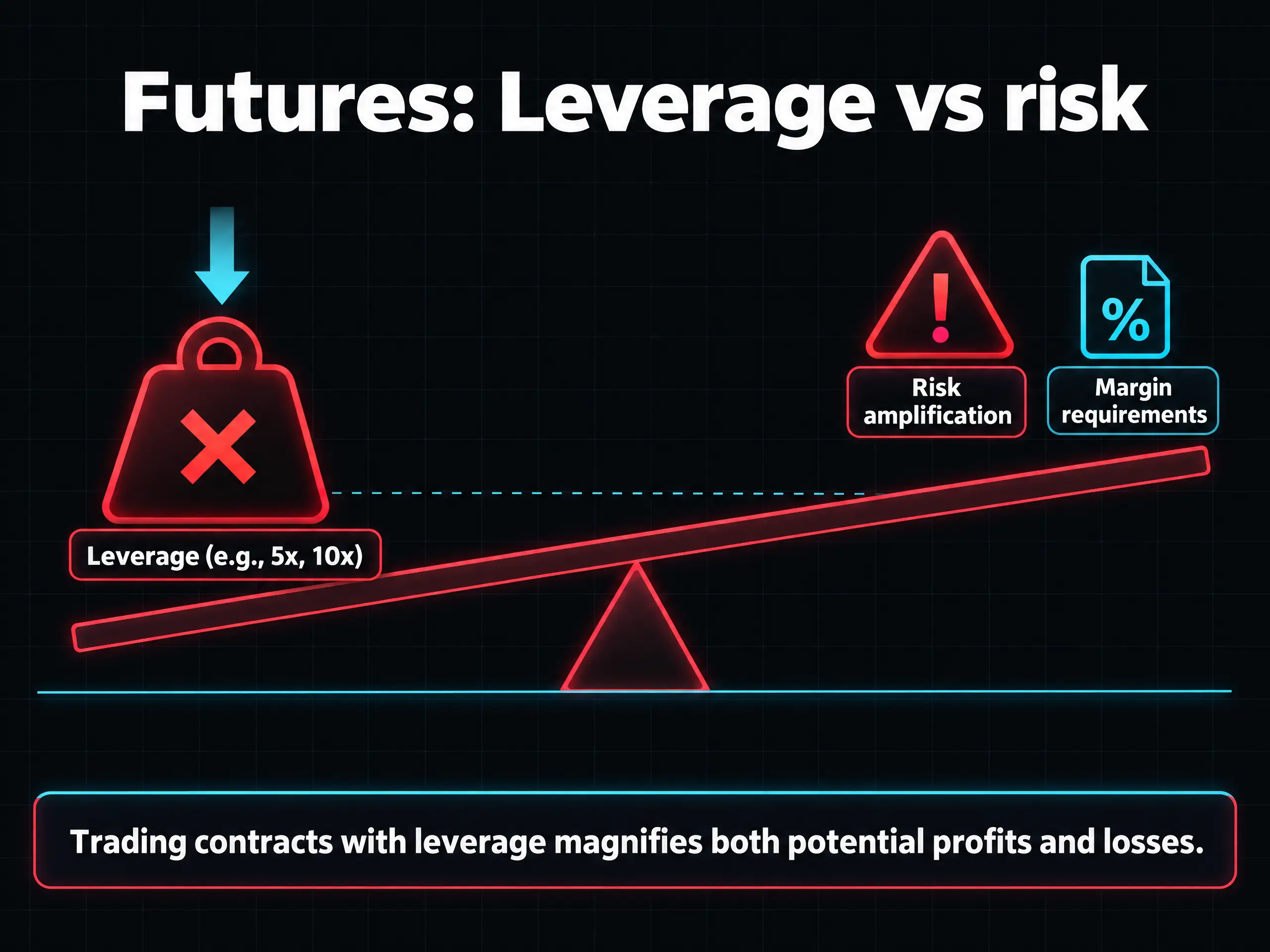
- Leverage: Multiplies exposure beyond your outlay (e.g., 5x leverage).
- Margin: Deposit needed to maintain open positions.
- Liquidation: Automatic closure when margin cannot cover losses.
Trading positions can be:
- Long: Profiting from price increases.
- Short: Profiting from price decreases.
Leverage magnifies both profits and loss speed; small adverse moves risk rapid liquidation.
CFDs: A different product
Contracts for Difference (CFDs) are derivative agreements with brokers without asset delivery.
CFDs feature distinct provider rules, including overnight swap fees and optional negative balance protection. Always review terms carefully.
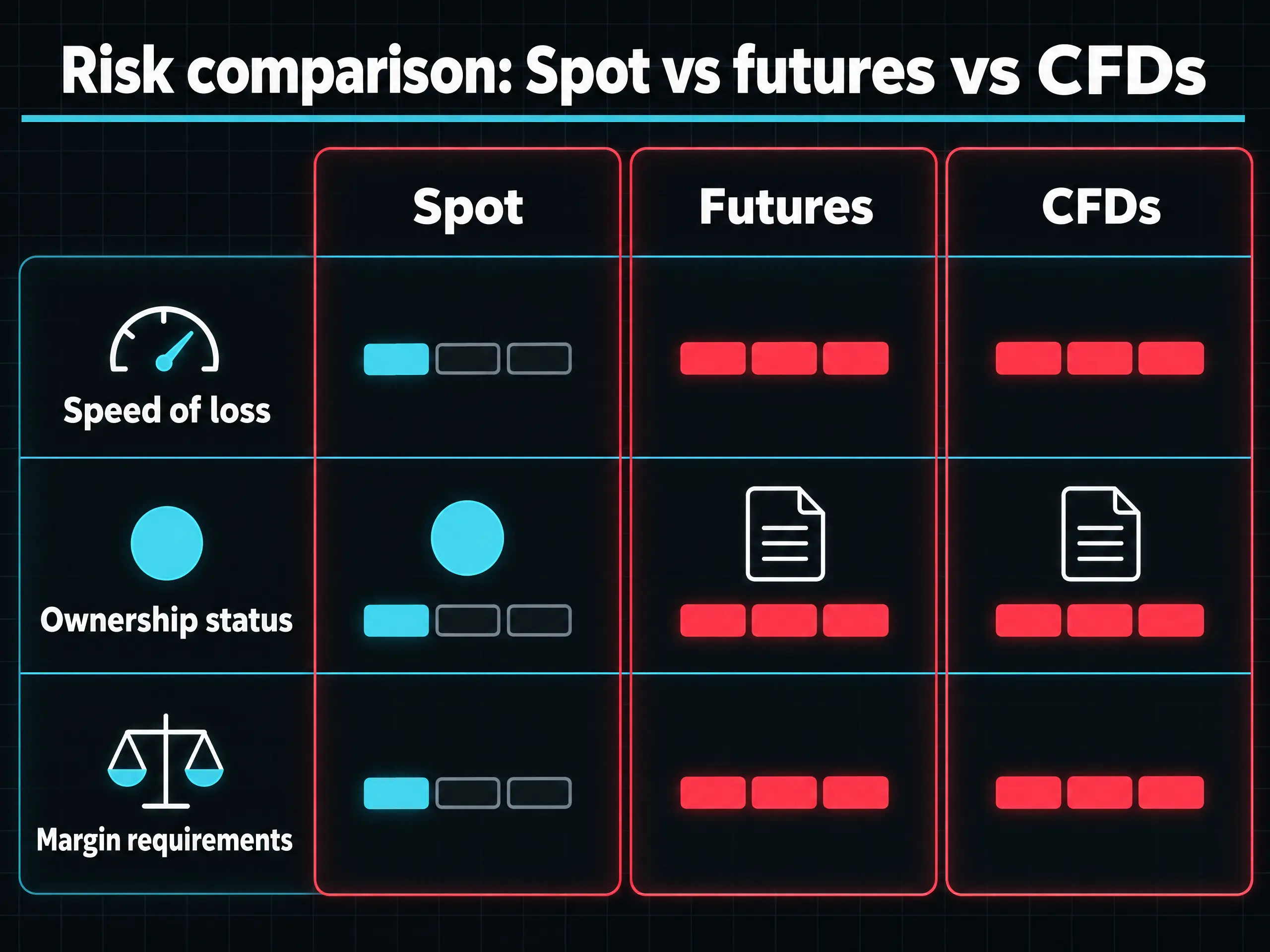
Side by side
Always verify maximum loss limits per product before trading leveraged instruments.
Key takeaway: Spot provides ownership without leverage; Futures and CFDs offer leveraged contracts with amplified exposure.
A worked example: the same price move, two outcomes
Hypothetical scenario excluding fees and funding rates:
Using 100 USDT capital:
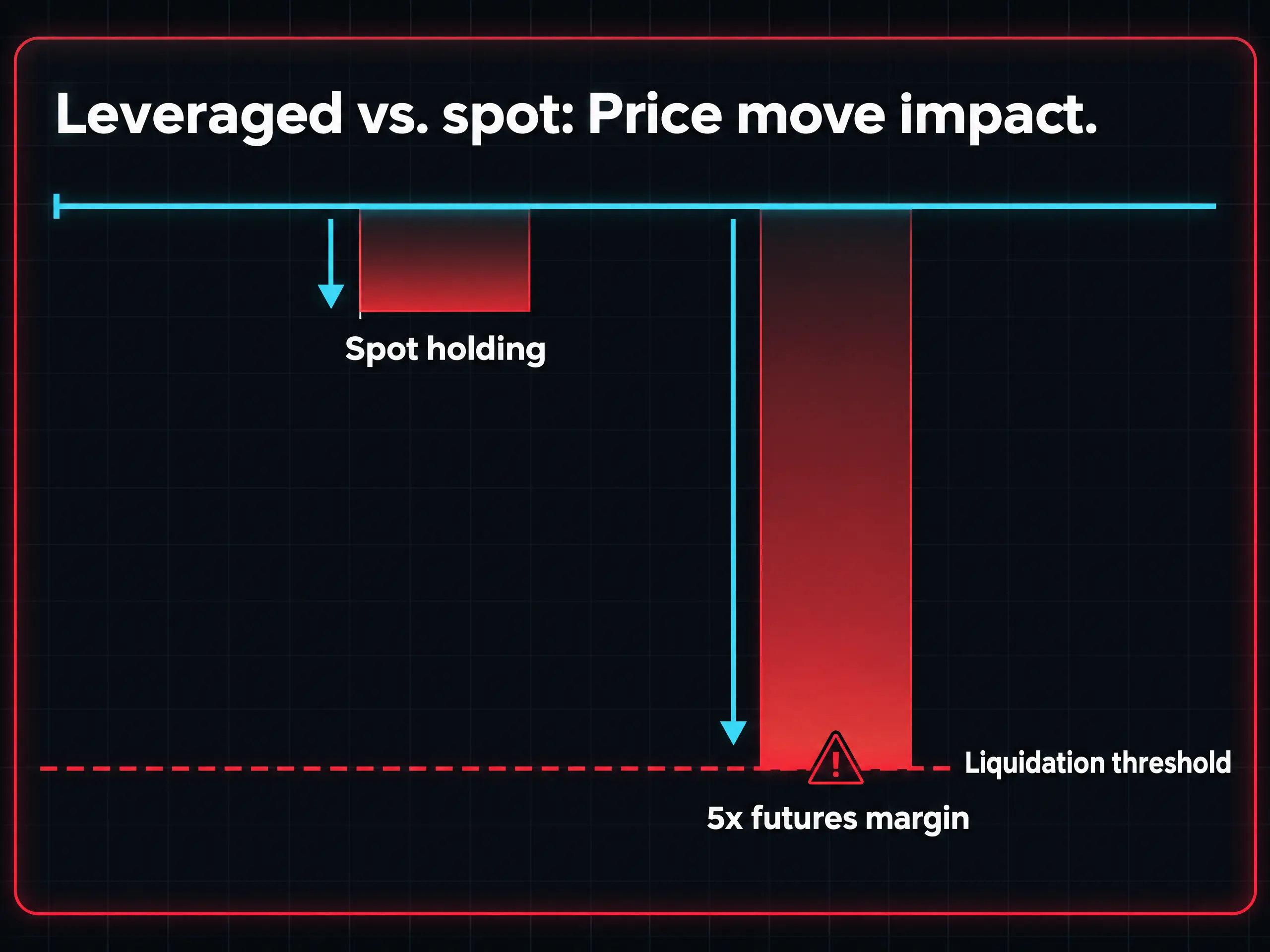
- Spot: 100 USDT buy = 100 USDT exposure.
- 5x Futures: 100 USDT margin = 500 USDT exposure.
Futures significantly amplify move impacts across both directions.
Critical difference: Spot lets you hold through market dips, whereas futures can trigger liquidation before prices recover.
What each product means for your risk
Funding rates are periodic payments between long/short traders keeping perpetual futures aligned with spot prices.
How to choose between them
Consider these criteria when evaluating options:
- Spot: Ideal for simpler trading without leverage risks.
- Futures readiness checklist:
- Understand leverage, margin, and liquidation rules clearly.
- Know your exact liquidation price levels in advance.
- Ensure potential margin loss fits your risk tolerance.
- CFDs: Separate framework from exchange products.
- If uncertain, stick to spot trading while learning.
Futures are optional and subject to local regulatory availability.
Risk reminder
Leveraged products carry significant loss risk and automatic liquidation potential. Trade only risk capital. Content is for educational purposes only.
Next step
Explore risk dynamics further in our leverage and margin guide.
Quiz
In spot trading, what do you receive when you buy?
You put up 100 USDT of margin at 5x leverage. How large is your position?
What is liquidation?
Which statement is correct?
FAQs


