Leverage lets you trade with more money than you deposit. It boosts potential profits, but also increases risk and losses.
This simple guide covers leverage, margin, and liquidation risk.
Quick summary
- Leverage boosts trade size, profits, and losses.
- Margin is the deposit needed for a trade.
- Position size = margin × leverage.
- Higher leverage raises liquidation risk.
What is leverage?
Leverage lets you control larger positions with less money, shown as ratios like 5x or 10x:
- 1x: Trade size equals your deposit.
- 5x: Trade size is 5x your deposit.
- 10x: Trade size is 10x your deposit.
Higher leverage scales gains and losses equally.
Leverage applies to futures and CFDs, not spot trading. See our guide to spot vs. futures vs. CFDs.
What is margin?
Margin is the deposit required to open and hold a leveraged trade.
Key formula: Position size = margin × leverage.
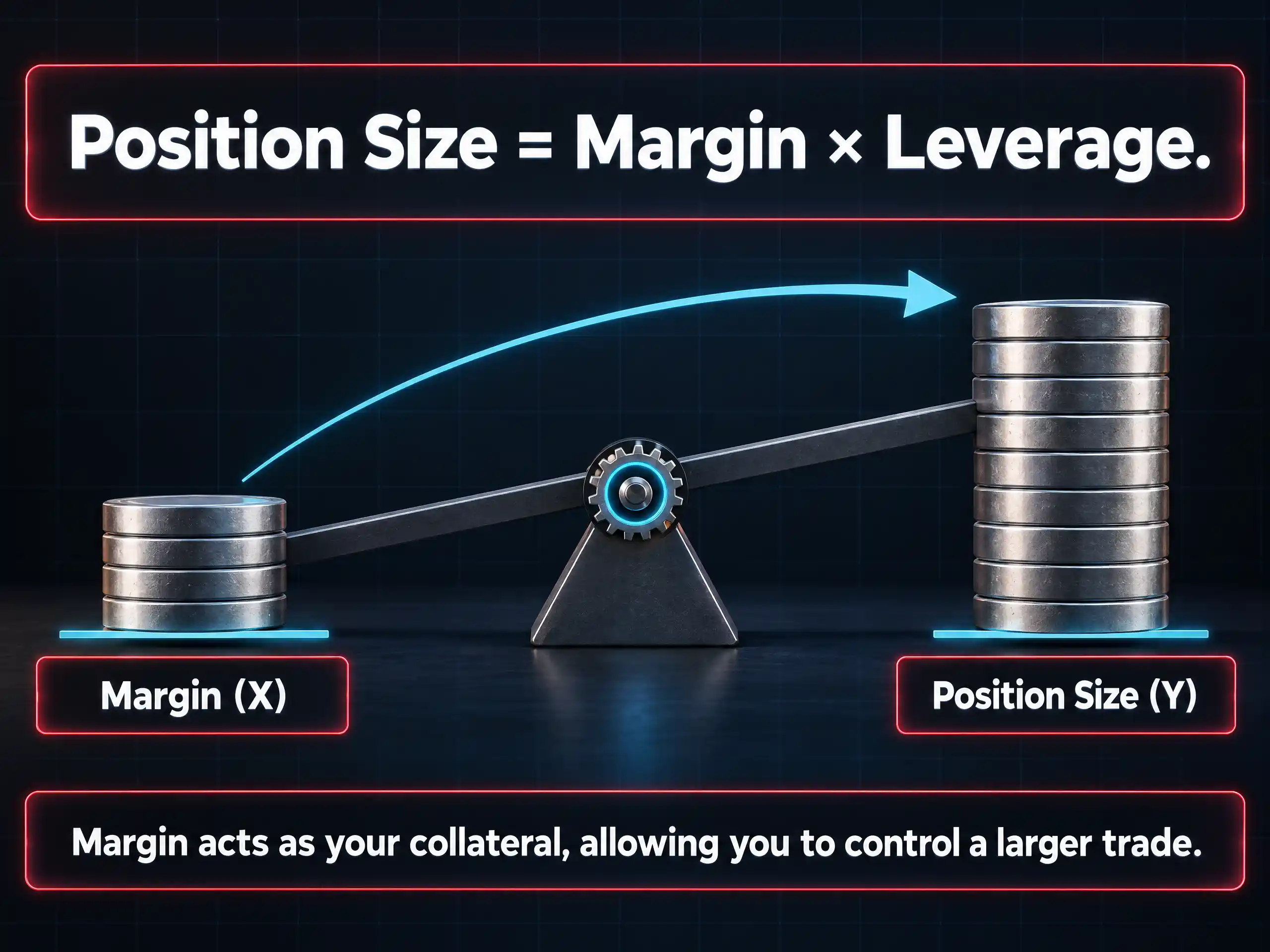
Example: 100 USDT margin at 10x leverage = 1,000 USDT position.
Margin absorbs losses. If it runs out, your trade is liquidated.
Reversed formula: Margin = position size ÷ leverage.
Margin requirements vary by product and exchange. Always check your platform terms.
How leverage changes the same trade
Hypothetical example (excluding fees and funding costs):
BTC is 50,000 USDT. You trade long with 100 USDT margin across three scenarios:
Now the price moves 5% in each direction:
With 100 USDT margin, higher leverage scales gains and losses. At 10x, a 5% drop wipes out half your margin.
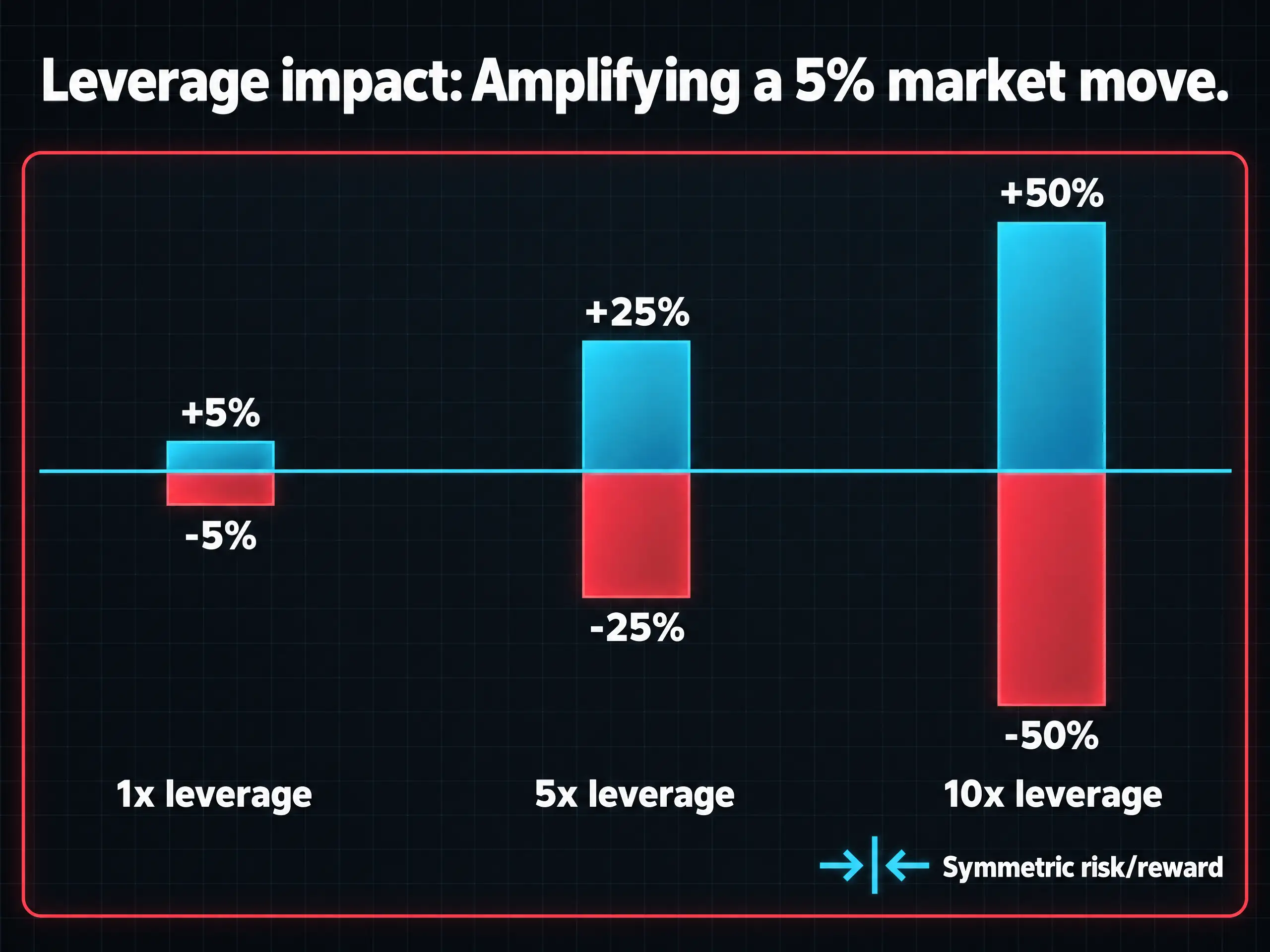
Takeaway: Leverage doesn't change your initial deposit. It controls how quickly price moves affect it.
Why higher leverage brings liquidation closer
Liquidation happens when losses consume your margin, closing your position automatically.
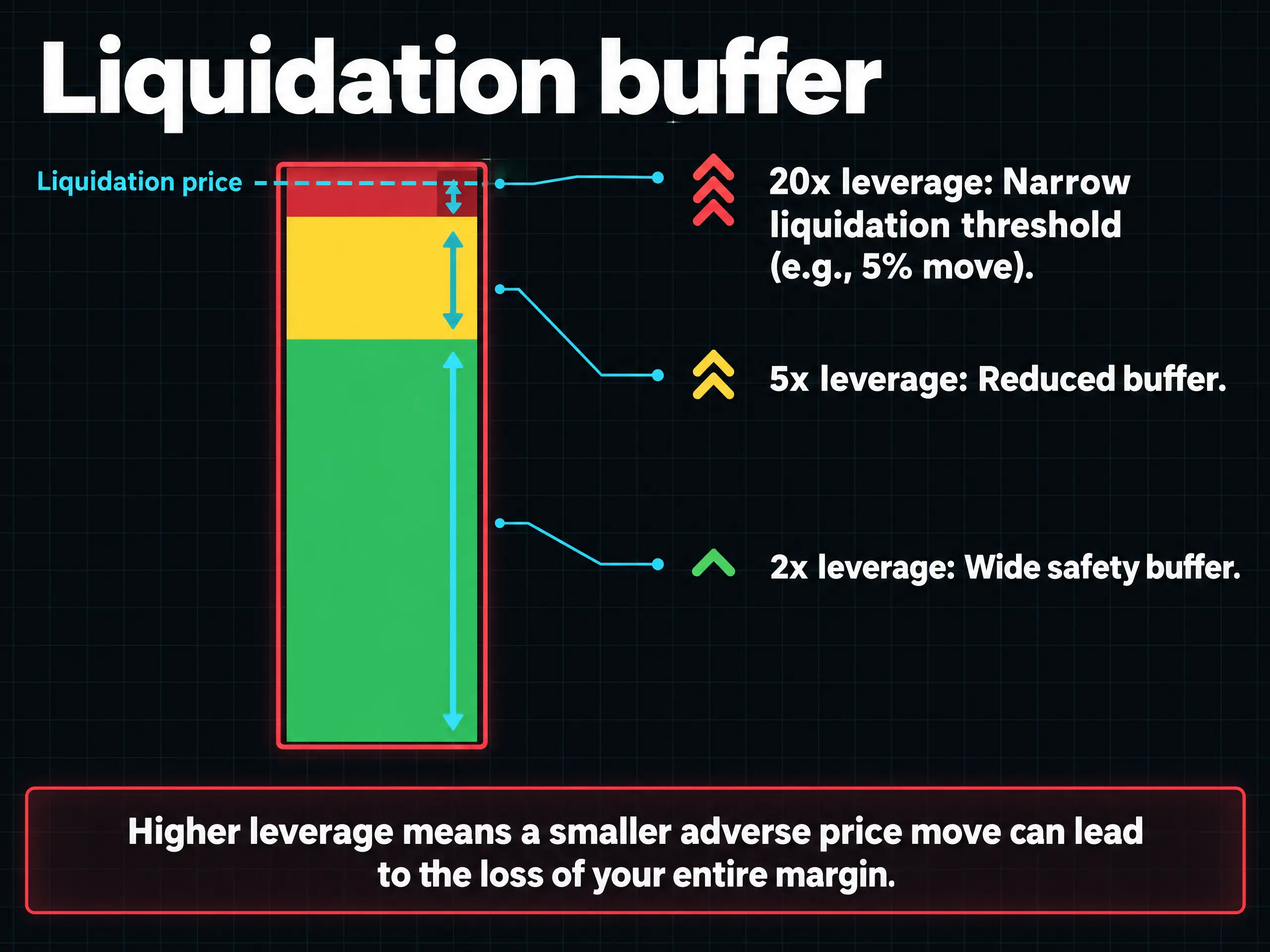
Higher leverage leaves less safety room before liquidation (100 USDT margin example):
Rough rule: Liquidation distance ≈ 1 ÷ leverage. At 10x, a 10% move liquidates you; at 20x, a 5% move does.
Note: Platform buffers mean liquidation often happens slightly sooner.
A worked example: A liquidation
Hypothetical scenario ignoring fees and platform buffers:
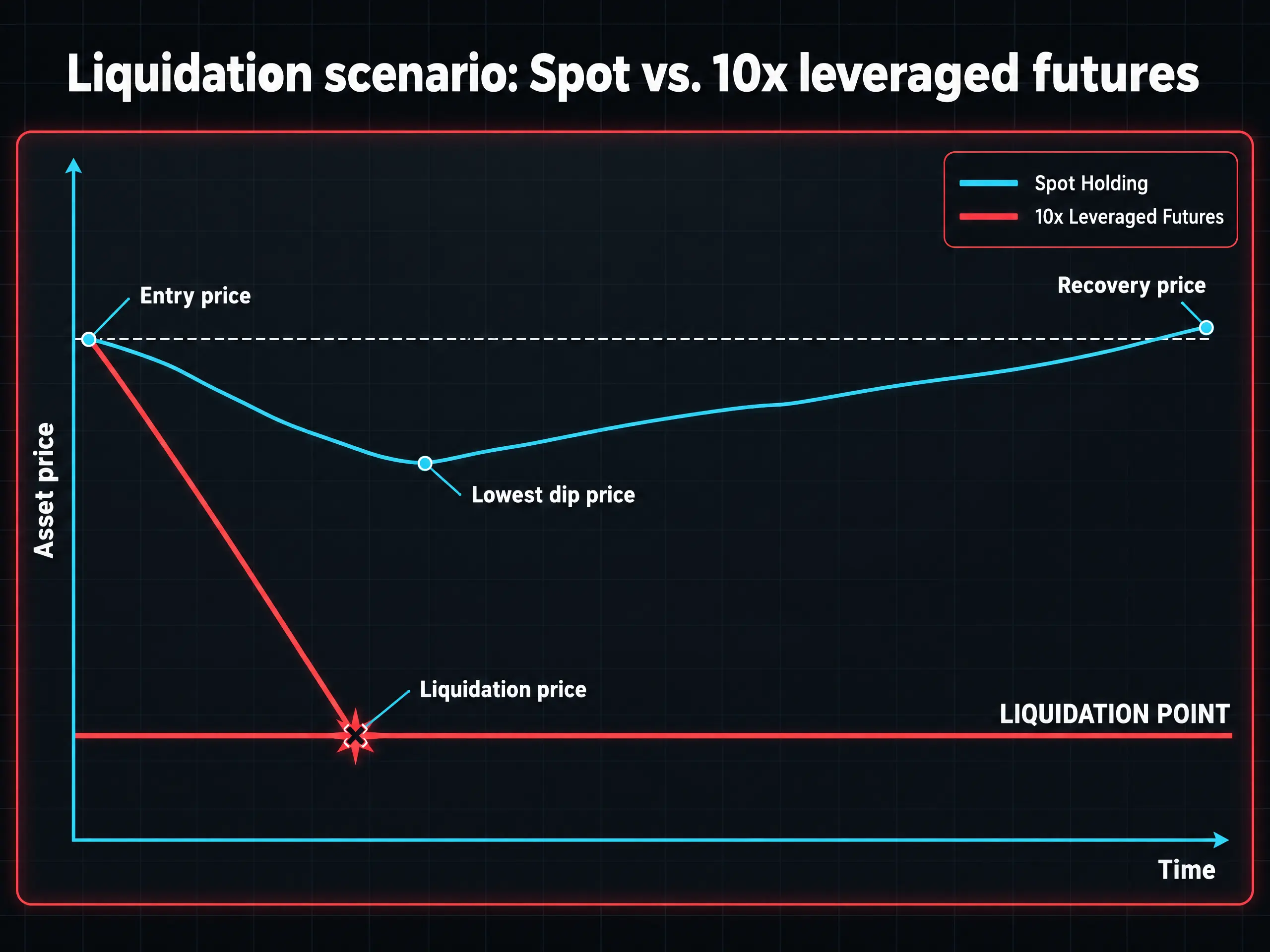
BTC is 50,000 USDT. You open a 10x long trade using 100 USDT margin (0.02 BTC position).
The price falls 10%, to 45,000:
- Loss: 0.02 × (45,000 − 50,000) = −100 USDT
- This equals your whole margin, so the platform closes the position.
- Result: −100 USDT
If price rebounds to 55,000 later, you don't profit because the position is already closed.
Compare this with spot, using the same 100 USDT:
Spot lets you wait out dips. Leveraged trades don't afford that luxury if liquidated.
Can you lose more than your margin?
It depends on platform rules. Some offer negative balance protection, preventing losses beyond your deposit. Always verify terms before trading.
Costs that build up with leverage
Leverage affects costs as well as results:
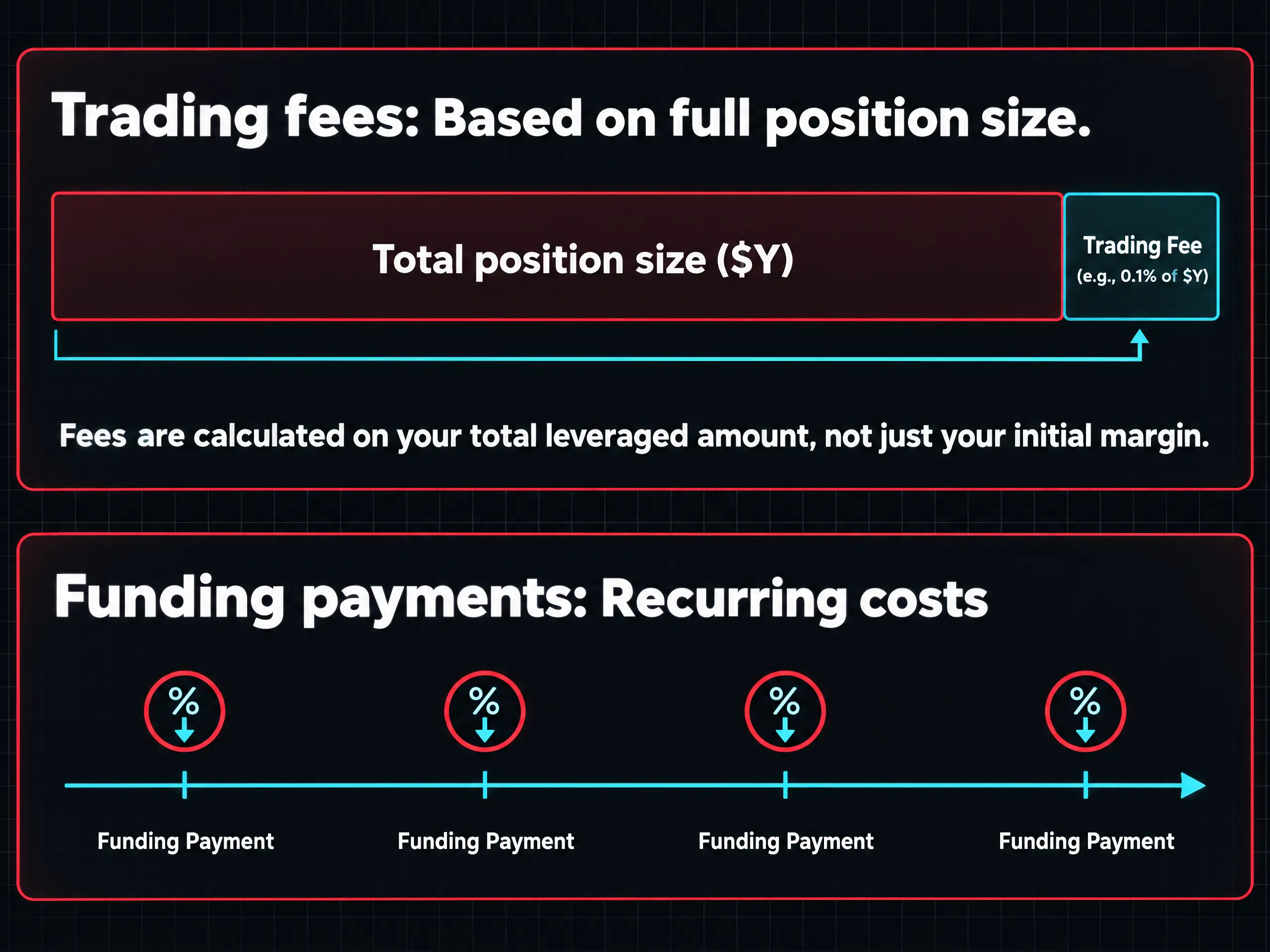
- Trading Fees: Charged on full position size (1,000 USDT), not just margin (100 USDT).
- Funding Rates: Regular payments on perpetual futures that add up over time.
These fees reduce profitability even during flat market movements. See our funding rates guide.
Ways people try to reduce liquidation risk
- Use lower leverage to give trades more price room.
- Add margin to delay liquidation (risks more capital).
- Reduce position size to cut potential losses.
These tactics manage risk. They don’t eliminate it.
What can go wrong with leverage
- Rapid losses: Small price swings can wipe out margin quickly.
- Forced liquidation: Automates closing and locks in losses.
- Slippage: Market volatility can cause worse execution prices.
- Accumulated costs: High fees and funding rates reduce profits.
- Overconfidence: Early gains can lead to reckless leverage later.
- Averaging down: Adding margin to a losing trade increases total risk.
- 24/7 volatility: Overnight price swings can trigger liquidation while unmonitored.
Questions to ask yourself before using leverage
- Can I explain leverage, margin and liquidation in my own words?
- Do I know my exact liquidation price?
- Would losing this margin impact my financial stability?
- Can I handle a sudden total loss without emotional trading?
- Do I have a risk monitoring plan during offline hours?
- Is this trade part of a clear plan, or based on emotion?
If you answer "no" to any question, stick to spot trading or practice further.
If you decide to use leverage
If you choose to use leverage, these habits help mitigate risk:
- Start with the lowest leverage level.
- Only risk funds you can afford to lose completely.
- Always check your liquidation price before trading.
- Review full trading fees in advance.
- Avoid raising leverage after winning trades.
Risk reminder
Leveraged trading is high risk and can lead to rapid total loss. Positions may be liquidated automatically. Fees apply to total position size. Only trade with disposable capital. Educational content only, not financial advice.
Next step
Learn how position sizing connects to risk management in our position sizing guide.
Quiz
You put up 100 USDT of margin at 10x leverage. How large is your position?
What does leverage do to your results?
Using the simplified rule, roughly what price move against you uses up all your margin at 5x leverage?
What happens if the price recovers after your position is liquidated?
FAQs