Os mercados de petróleo e gás natural são atualmente dominados por tensões geopolíticas crescentes entre os Estados Unidos e o Irão, que remodelaram drasticamente as expectativas de fornecimento e a volatilidade dos preços. Uma série de ações militares envolvendo os EUA, Israel e o Irão perturbou os fluxos através do Estreito de Ormuz, um ponto de estrangulamento crítico para o comércio energético mundial, e empurrou os preços do petróleo bruto para máximos de vários anos. Na Deriv, os traders podem aceder a estes mercados voláteis através de CFDs (contratos por diferença), permitindo-lhes tomar posições longas ou curtas e gerir a exposição com alavancagem e controlos de risco adequados a oscilações rápidas de preços.
Resumo rápido: o que os traders de petróleo e gás devem saber
- O conflito EUA-Irão é o motor dominante da volatilidade do petróleo e do gás, à medida que os prémios de risco geopolítico aumentam. Os índices de referência globais ultrapassaram brevemente os 80+ USD por barril.
- As perturbações no Estreito de Ormuz estrangularam efetivamente cerca de 20% dos fluxos globais de petróleo e GNL por via marítima, intensificando o risco de preços.
- Os CFDs na Deriv permitem posições longas e curtas com alavancagem, úteis em mercados de rápida evolução.
- Os controlos de risco como ordens stop-loss, dimensionamento de posição e prática em conta de demonstração são essenciais ao negociar estas matérias-primas.
- As estruturas técnicas e fundamentais ajudam a navegar pelas oscilações voláteis desencadeadas por divulgações macroeconómicas no contexto de notícias de conflitos.
O que está a impulsionar os preços do petróleo e do gás natural neste momento?
Conflito geopolítico: EUA e Irão
Os recentes ataques dos EUA e de Israel à infraestrutura militar iraniana, seguidos de forte retaliação iraniana e avisos em torno do Estreito de Ormuz, empurraram a geopolítica energética para a linha da frente da ação dos preços. Os mercados estão a incorporar nos preços o risco de curto prazo de interrupções de fornecimento porque cerca de 20% do petróleo e do gás natural liquefeito mundial passa por Ormuz.
A paragem efetiva do tráfego de petroleiros através do estreito tem sido citada como um fator fundamental para a subida dos preços do petróleo bruto, à medida que as empresas de navegação retiram operações e os custos de seguro disparam.
Expectativas de fornecimento e respostas de preços
Os índices de referência do petróleo bruto, como o Brent e o WTI, registaram fortes subidas (intervalo de 7–13%), à medida que os mercados incorporam o risco de perturbação real. Alguns analistas defendem que, sem o conflito, os preços do petróleo poderiam estar significativamente mais baixos do que os níveis atuais.
O acesso interrompido às exportações de gás do Médio Oriente e os impactos nas infraestruturas regionais também exercem pressão ascendente sobre os indicadores de referência do gás natural.
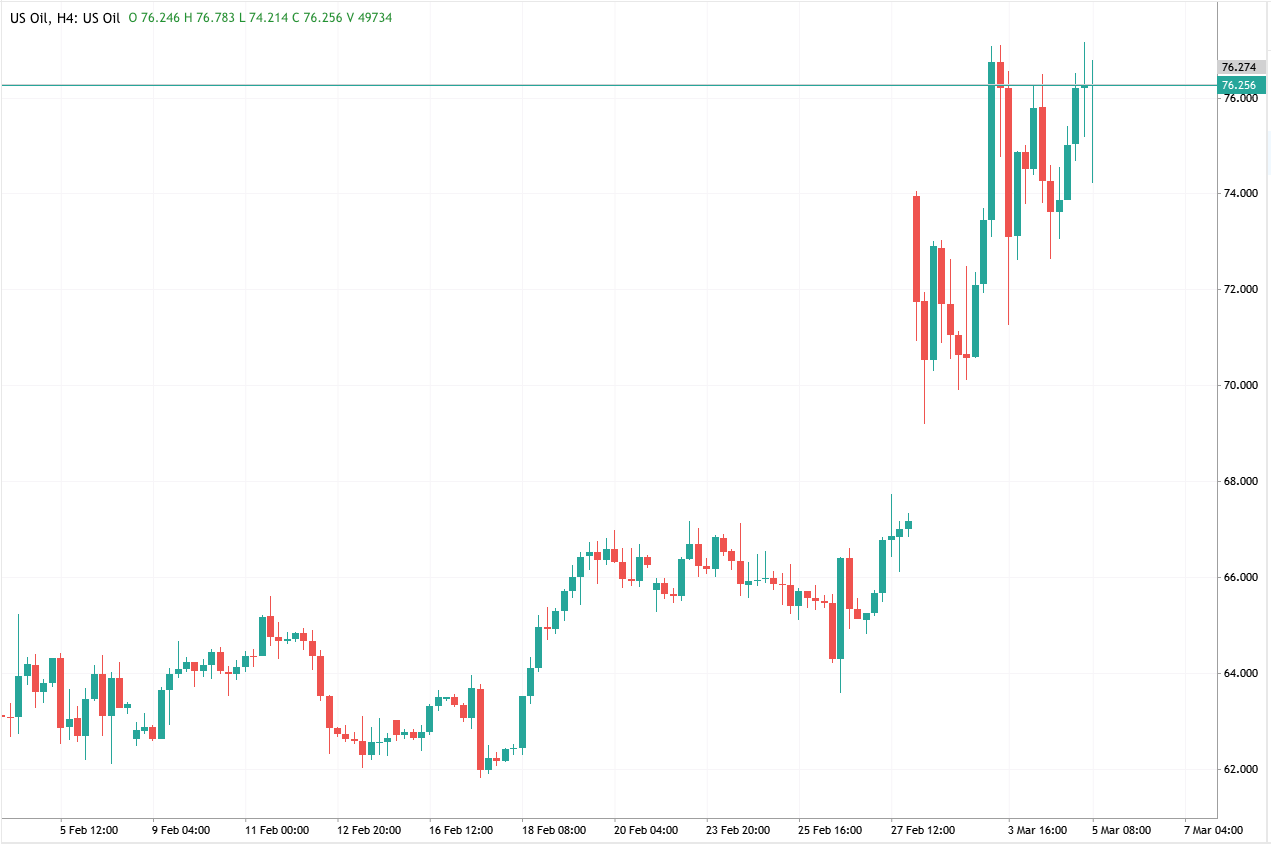
Por que a volatilidade cria oportunidades de negociação na Deriv
A volatilidade elevada significa intervalos de preços maiores em períodos curtos, que os traders podem aproveitar para obter ganhos em qualquer direção.
Com os CFDs na Deriv MT5 (p. ex., US Oil, UK Brent oil, NGAS), os lucros ou perdas baseiam-se na diferença de preço entre a entrada e a saída, multiplicada pelo tamanho do contrato. A utilização de alavancagem permite aos traders abrir posições maiores com uma fração do capital necessário — mas também aumenta a exposição ao risco.
Alavancagem e margem: noções básicas
- A alavancagem aumenta tanto os ganhos potenciais como as perdas potenciais.
- Margem é a garantia necessária para manter uma posição; movimentos adversos podem rapidamente corroer a margem, levando a encerramentos automáticos.
Isto torna os controlos de risco rigorosos, como perdas máximas predefinidas, fundamentais em mercados impulsionados por conflitos com risco de enxurrada de notícias.
Como diferentes traders podem abordar os mercados de energia
Scalpers
- Visam movimentos intradiários baseados em gráficos de um minuto a 15 minutos.
- Capitalizam picos noticiosos e aumentos de liquidez de curto prazo.
- Utilizam sempre stop losses rigorosos para conter o risco.
Swing traders
- Negoceiam ao longo de horas até alguns dias.
- Procuram padrões de rutura após divulgações económicas ou fluxos de manchetes de conflitos.
- Equilibram sinais técnicos (RSI, MACD) com catalisadores geopolíticos.
Traders de posição
- Concentram-se em tendências macroeconómicas como interrupções prolongadas ou desequilíbrios de inventário.
- Utilizam zonas de stop mais amplas para resistir ao ruído das oscilações minuto a minuto.
Configurações técnicas comuns em volatilidade impulsionada por conflitos análise técnica
Reversões e ruturas
Os padrões de reversão (topos/fundos duplos, ombro-cabeça-ombro) e as formações de rutura podem ser fiáveis, mas devem ser confirmados com volume e calendários de notícias, pois o risco de manchetes pode causar movimentos desproporcionados.
Suporte e resistência
Os níveis-chave de preços tornam-se mais importantes durante prémios geopolíticos. As ruturas podem sinalizar a continuação da tendência, enquanto as rejeições frequentemente evidenciam consolidação temporária.
Indicadores
- RSI: identifica condições de sobrecompra/sobrevenda.
- MACD: destaca mudanças de momentum.
- Médias móveis: suavizam tendências, úteis em intervalos voláteis.
Passo a passo: negociar petróleo e gás natural na Deriv MT5
- Inicie sessão e abra a Deriv MT5.
- Procure os símbolos: US Oil, UK Brent Oil ou NGAS (gás natural).
- Abra a janela de ordem e defina o tamanho do lote.
- Aplique níveis de stop-loss e take-profit com base no intervalo de volatilidade e nos limites de risco.
- Clique em "Buy" para abrir uma posição longa ou "Sell" para abrir uma posição curta.
O seu lucro/perda reflete a diferença de preço multiplicada pelo tamanho do contrato escolhido.
Fundamentos da gestão de risco durante a volatilidade geopolítica estratégias de gestão de risco
- Dimensionamento de posição: Tamanhos de lote reduzidos ajudam a sobreviver a oscilações violentas.
- Ordens de stop-loss: Utilize-as sempre para fixar os limites de risco — a volatilidade pode alargar os spreads e desencadear derrapagens.
- Disciplina de alavancagem: A alavancagem elevada pode drenar contas rapidamente em reações a notícias de última hora.
- Mantenha-se informado: Acompanhe as comunicações da OPEP+, dados de inventário dos EUA, fluxos noticiosos geopolíticos — estes impulsionam o sentimento intradiário.
Lembrete fundamental: Arrisque apenas o capital que pode perder.
Mercados à vista vs CFDs em condições turbulentas negociação de CFD
Os CFDs permitem-lhe negociar movimentos de preços sem deter a mercadoria física. Isto proporciona flexibilidade estratégica durante conflitos, quando os mercados à vista podem ter riscos de entrega ou constrangimentos logísticos.
Os CFDs também permitem vender a descoberto facilmente — valioso em vendas repentinas ou cenários de procura de energia em modo de aversão ao risco.
Gerir a psicologia sob incerteza liderada por conflitos
A volatilidade pode desencadear respostas emocionais:
- Evite negociar em excesso após vitórias ou perdas.
- Respeite os seus limites de risco diários.
- Se os mercados se tornarem caóticos em torno de manchetes importantes, recue e reavalie.
A disciplina emocional é tão crucial quanto a competência técnica.
Conclusão: estratégias e considerações para ajudar a gerir o risco e informar decisões de negociação em mercados de energia moldados por conflitos
A negociação de energia em março de 2026 é dominada pelo risco geopolítico EUA-Irão, que remodelou materialmente as expetativas de preços e a volatilidade. Seja a fazer scalping em oscilações intradiárias ou a manter negociações baseadas em perturbações macroeconómicas, as ferramentas de CFD da Deriv proporcionam aos traders exposição flexível tanto a mercados em alta como em queda — desde que o risco seja gerido com estrutura e disciplina.
Antes de comprometer fundos reais, pratique estratégias numa conta demo da Deriv para aperfeiçoar configurações e parâmetros de risco nestas condições de alta volatilidade.
Questionário
Qual a prática mais importante ao negociar petróleo e gás natural durante mercados voláteis?
Perguntas frequentes