Los mercados de petróleo y gas natural están actualmente dominados por tensiones geopolíticas escaladas entre Estados Unidos e Irán, que han remodelado drásticamente las expectativas de suministro y la volatilidad de precios. Una serie de acciones militares que involucran a EE. UU., Israel e Irán ha interrumpido los flujos a través del Estrecho de Hormuz, un punto de estrangulamiento crítico para el comercio energético mundial, y ha impulsado los precios del crudo a máximos de varios años. En Deriv, los traders pueden acceder a estos mercados volátiles a través de CFDs (contratos por diferencia), lo que les permite tomar posiciones largas o cortas y gestionar la exposición con apalancamiento y controles de riesgo adecuados para las oscilaciones rápidas de precios.
Resumen rápido: lo que los traders de petróleo y gas deben saber
- El conflicto EE. UU.-Irán es el motor dominante de la volatilidad del petróleo y el gas a medida que las primas de riesgo geopolítico aumentan. Los puntos de referencia mundiales cruzaron brevemente US$80+ por barril.
- Las interrupciones en el Estrecho de Hormuz han estrangulado efectivamente alrededor del 20% de los flujos mundiales de petróleo y GNL por vía marítima, intensificando el riesgo de precios.
- Los CFDs en Deriv permiten posiciones largas y cortas con apalancamiento, útiles en mercados de rápido movimiento.
- Los controles de riesgo como las órdenes de stop-loss, el dimensionamiento de posiciones y la práctica con cuenta demo son esenciales al operar con estos commodities.
- Los marcos técnicos y fundamentales ayudan a navegar las oscilaciones volátiles desencadenadas por publicaciones macroeconómicas en el contexto de noticias de conflictos.
¿Qué está impulsando los precios del petróleo y el gas natural en este momento?
Conflicto geopolítico: EE. UU. e Irán
Los recientes ataques de EE. UU. e Israel contra la infraestructura militar iraní, seguidos de una fuerte represalia iraní y advertencias en torno al Estrecho de Hormuz, han llevado la geopolítica energética al primer plano de la acción de precios. Los mercados están incorporando el riesgo a corto plazo de interrupciones del suministro porque alrededor del 20% del petróleo mundial y del gas natural licuado pasa a través de Hormuz.
La paralización efectiva del tráfico de petroleros a través del estrecho se ha citado como un factor clave que impulsa los precios del crudo, ya que las empresas navieras retiran operaciones y los costos de seguro se disparan.
Expectativas de suministro y respuestas de precios
Los puntos de referencia del crudo como Brent y WTI han experimentado repuntes marcados (rango del 7-13%) a medida que los mercados incorporan el riesgo de interrupción real. Algunos analistas sostienen que sin el conflicto, los precios del petróleo podrían estar significativamente más bajos que los niveles actuales.
El acceso interrumpido a las exportaciones de gas de Oriente Medio y los impactos en la infraestructura regional también añaden presión al alza a los puntos de referencia del gas natural.
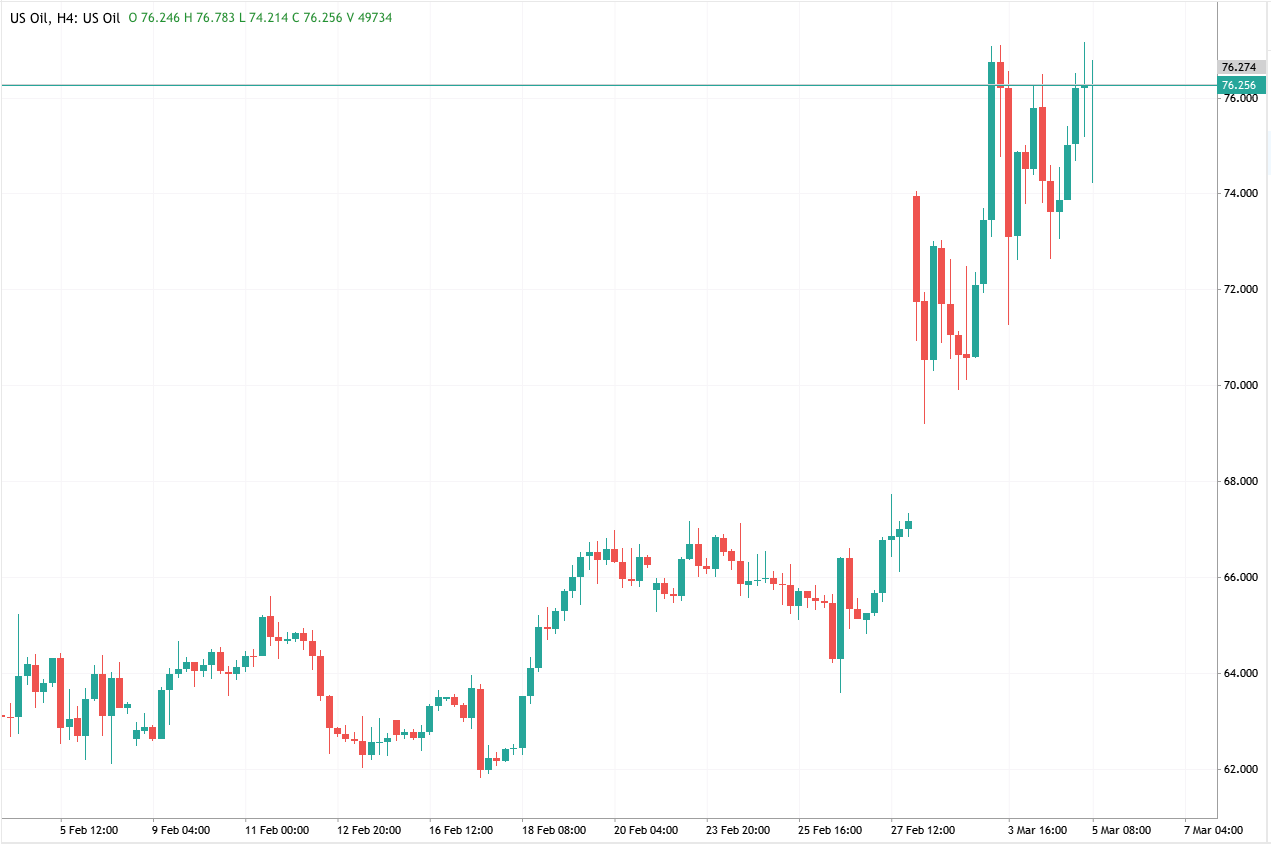
Por qué la volatilidad crea oportunidades de trading en Deriv
Una volatilidad elevada significa rangos de precios más amplios en períodos cortos, que los traders pueden aprovechar para obtener ganancias en cualquier dirección.
Con CFDs en Deriv MT5 (p. ej., US Oil, UK Brent oil, NGAS), las ganancias o pérdidas se basan en la diferencia de precio entre la entrada y la salida, multiplicada por el tamaño del contrato. El uso del apalancamiento permite a los traders abrir posiciones más grandes con una fracción del capital requerido, pero también aumenta la exposición al riesgo.
Apalancamiento y margen básicos
- El apalancamiento aumenta tanto las ganancias potenciales como las pérdidas potenciales.
- El margen es la garantía requerida para mantener una posición; los movimientos adversos pueden erosionar rápidamente el margen, lo que lleva a stop-outs.
Esto hace que los controles de riesgo estrictos como los stop losses predefinidos sean críticos en mercados impulsados por conflictos con riesgo de avalancha de noticias.
Cómo diferentes traders pueden abordar los mercados energéticos
Scalpers
- Enfóquese en movimientos intradía basados en gráficos de un minuto a 15 minutos.
- Capitalice los picos de noticias y los aumentos de liquidez a corto plazo.
- Utilice siempre stops ajustados para contener el riesgo.
Swing traders
- Opere over horas a unos pocos días.
- Busque patrones de ruptura tras las publicaciones económicas o los flujos de noticias sobre conflictos.
- Equilibre las señales técnicas (RSI, MACD) con los catalizadores geopolíticos.
Traders de posición
- Concéntrese en tendencias macro como disrupciones prolongadas o desequilibrios de inventario.
- Utilice zonas de stop más amplias para resistir el ruido de las oscilaciones minuto a minuto.
Common technical setups in conflict-driven volatility technical analysis
Reversiones y rupturas
Los patrones de reversión (dobles techos/suelos, hombro-cabeza-hombro) y las formaciones de ruptura pueden ser confiables, pero deben confirmarse con volumen y calendarios de noticias, ya que el riesgo de titulares puede causar movimientos desproporcionados.
Soporte y resistencia
Los niveles de precio clave importan más durante las primas geopolíticas. Las rupturas pueden señalar continuación de tendencia, mientras que los rechazos a menudo destacan consolidación temporal.
Indicadores
- RSI: detecta condiciones de sobrecompra/sobreventa.
- MACD: resalta cambios de impulso.
- Medias móviles: suavizan tendencias, útiles en rangos volátiles.
Paso a paso: operar petróleo y gas natural en Deriv MT5
- Inicie sesión y abra Deriv MT5.
- Busque símbolos: US Oil, UK Brent Oil o NGAS (gas natural).
- Abra la ventana de orden y establezca el tamaño del lote.
- Aplique niveles de stop-loss y take-profit basados en el rango de volatilidad y los límites de riesgo.
- Haga clic en "Buy" para ir en largo o en "Sell" para ir en corto.
Su ganancia/pérdida refleja la diferencia de precio multiplicada por el tamaño de contrato elegido.
Risk management essentials during geopolitical volatility risk management strategies
- Dimensionamiento de posición: Los tamaños de lote reducidos ayudan a sobrevivir oscilaciones violentas.
- Órdenes de stop-loss: Utilícelas siempre para fijar límites de riesgo; la volatilidad puede ampliar los spreads y desencadenar deslizamiento.
- Disciplina de apalancamiento: El apalancamiento alto puede drenar las cuentas rápidamente ante reacciones a noticias de última hora.
- Manténgase informado: Siga las comunicaciones de la OPEP+, los datos de inventario de EE. UU., los feeds de noticias geopolíticas; estos impulsan el sentimiento intradía.
Recordatorio crítico: Arriesgue únicamente el capital que pueda permitirse perder.
Spot markets vs CFDs in turbulent conditions CFD trading
Los CFD le permiten operar movimientos de precios sin poseer la materia prima física. Esto proporciona flexibilidad estratégica durante conflictos cuando los mercados spot pueden tener riesgos de entrega o restricciones logísticas.
Los CFD también permiten fácilmente tomar posiciones cortas, lo cual es valioso en ventas masivas repentinas o escenarios de demanda energética de aversión al riesgo.
Gestión de la psicología bajo incertidumbre liderada por conflictos
La volatilidad puede impulsar respuestas emocionales:
- Evite operar en exceso después de ganancias o pérdidas.
- Respete sus límites de riesgo diarios.
- Si los mercados se vuelven caóticos en torno a titulares importantes, dé un paso atrás y reevalúe.
La disciplina emocional es tan crucial como la habilidad técnica.
Conclusión: estrategias y consideraciones para ayudar a gestionar el riesgo e informar las decisiones de trading en mercados energéticos moldeados por conflictos
El trading energético de marzo de 2026 está dominado por el riesgo geopolítico EE. UU.-Irán, que ha reconfigurado materialmente las expectativas de precios y la volatilidad. Ya sea haciendo scalping en oscilaciones intradía o manteniendo operaciones basadas en disrupciones macro, las herramientas de CFD de Deriv brindan a los traders exposición flexible tanto a mercados alcistas como bajistas, siempre que el riesgo se gestione con estructura y disciplina.
Antes de comprometer fondos reales, practique estrategias en una cuenta demo de Deriv para perfeccionar configuraciones y parámetros de riesgo en estas condiciones de alta volatilidad.
Cuestionario
¿Qué práctica es más importante al operar petróleo y gas natural durante mercados volátiles?
Preguntas frecuentes