
Stablecoins are digital tokens pegged to a fiat currency like USD to minimize price volatility, but they are not entirely risk-free due to potential depegging and issuer risks.
This guide explains what stablecoins are, why traders use them, and their risks.
Quick summary
- Stablecoins aim to hold a steady value, usually pegged to $1 USD (e.g., USDT, USDC).
- Traders use them to avoid the volatility of assets like Bitcoin (BTC).
- They are not risk-free. Prices can depeg or drop if issuer issues arise.
- Sending stablecoins over the wrong network can result in permanent loss.
What is a stablecoin?
A stablecoin is a type of cryptocurrency specifically designed to maintain a fixed value by being pegged to a reserve asset, such as a traditional fiat currency (most commonly 1 USD per coin).
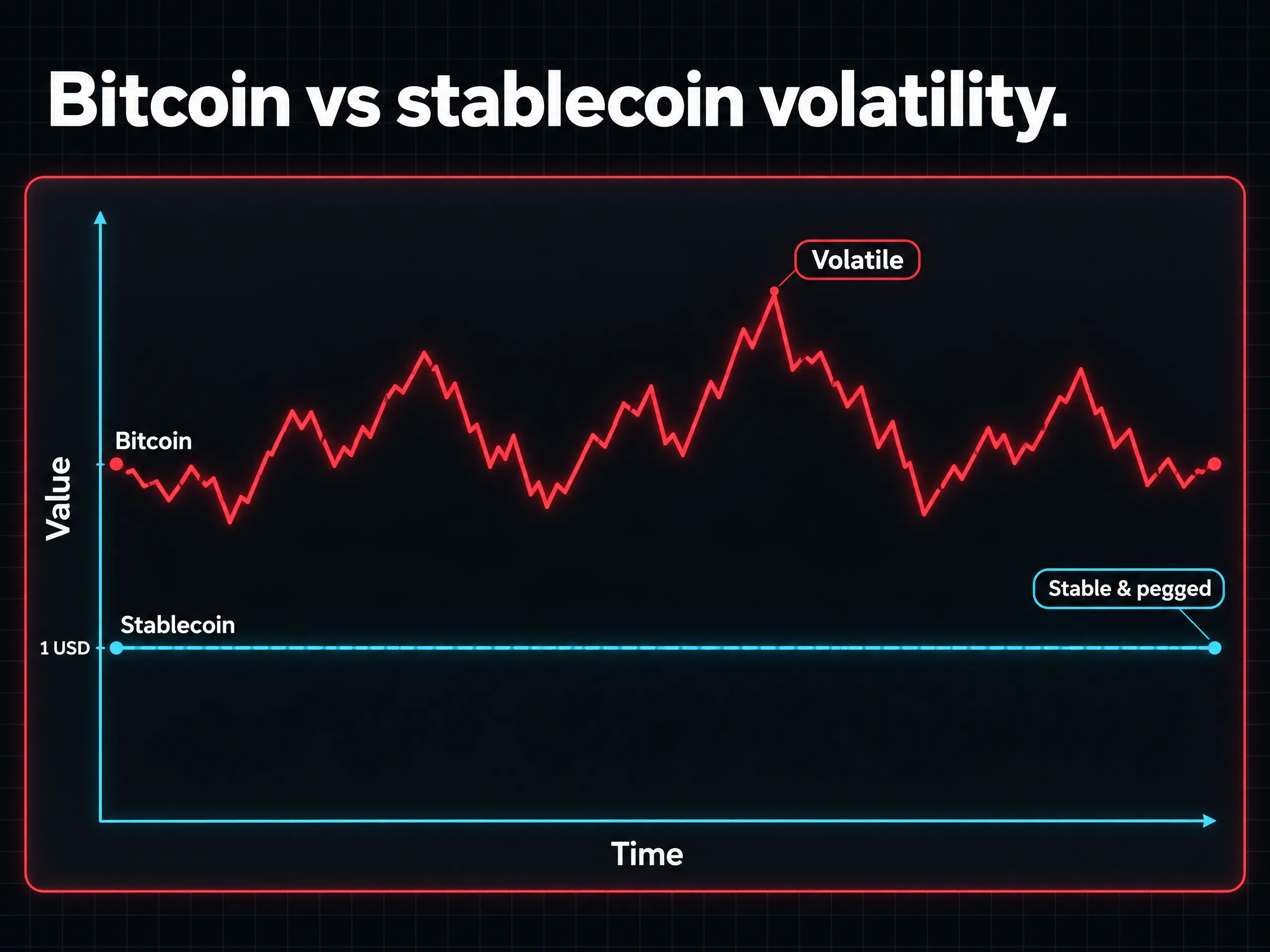
Unlike unpegged digital assets like Bitcoin (BTC), which experience significant price swings, stablecoins aim to offer price stability and minimize sudden market fluctuations. The chart below illustrates how a stablecoin maintains a flat line value compared to Bitcoin's price volatility over time.
Why do traders use stablecoins?
Traders rely on stablecoins for 3 (three) key functions:
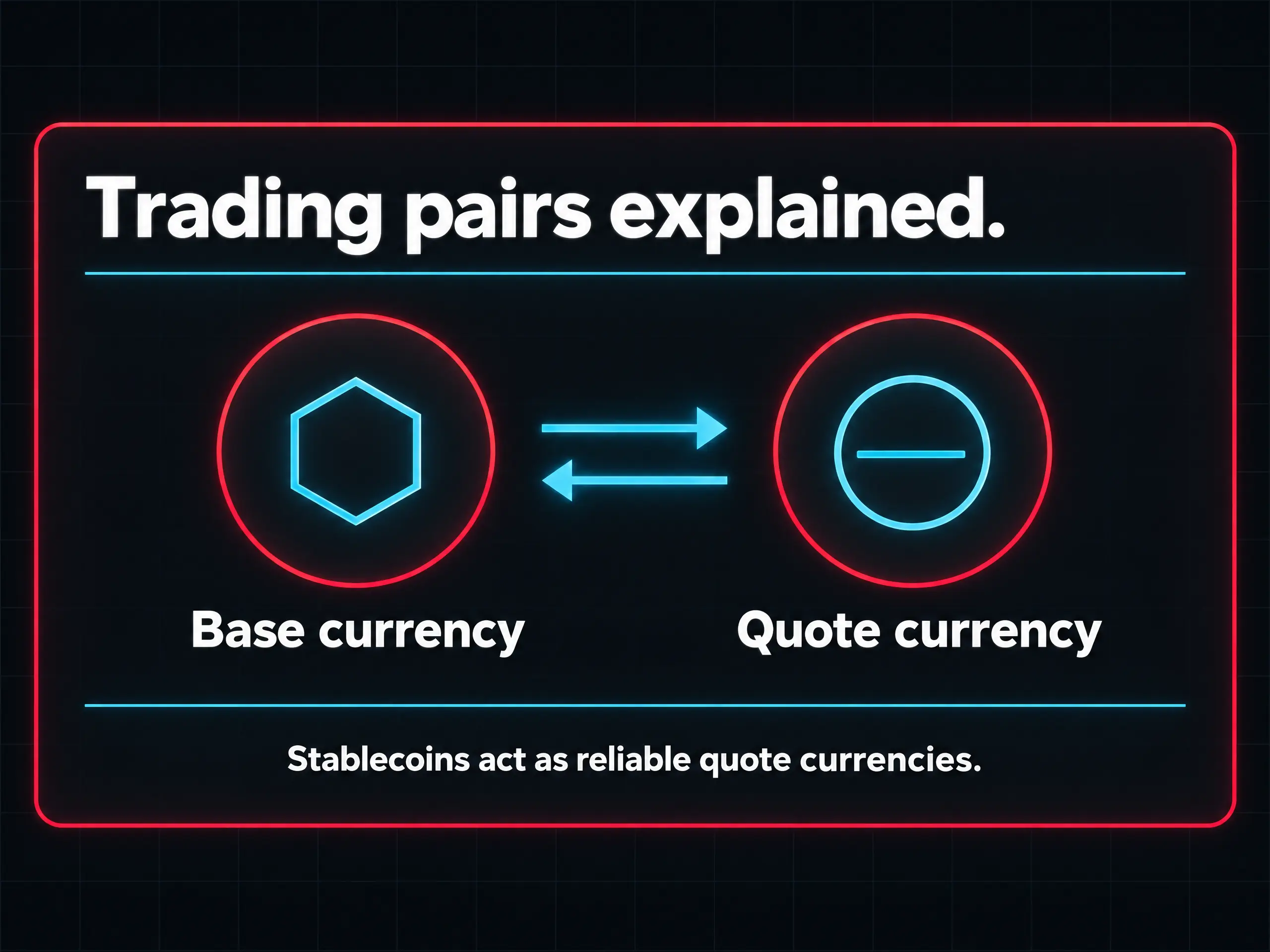
- Quote currencies: In pairs like BTC/USDT, the price is measured in the quote currency (USDT).
- Safe haven: Holds value securely between trades without exiting to cash.
- Tracking performance: Pegged values make measuring gains and losses straightforward.
Note: Most exchanges use stablecoins for trading pairs instead of traditional USD.
Why "stable" doesn't mean "risk-free"
Stablecoins aim for stability, but price guarantees do not exist.
Primary risks include:
- Depegging: Market prices can fluctuate above or below $1.
- Issuer insolvency: Issues with the issuing company or system reserves can devalue the coin.
Depegging example: If 100 USDT drops to $0.98 each, your holdings lose $2 in value.
Takeaway: Stablecoins move less than other cryptocurrencies, but value loss is still possible.
Stablecoins and transfer mistakes
Transfer errors are a common cause of financial loss for beginners.
Transfers require a wallet address and a compatible network. The same token often exists on multiple networks.
Sending funds to an unsupported network usually results in irreversible loss.
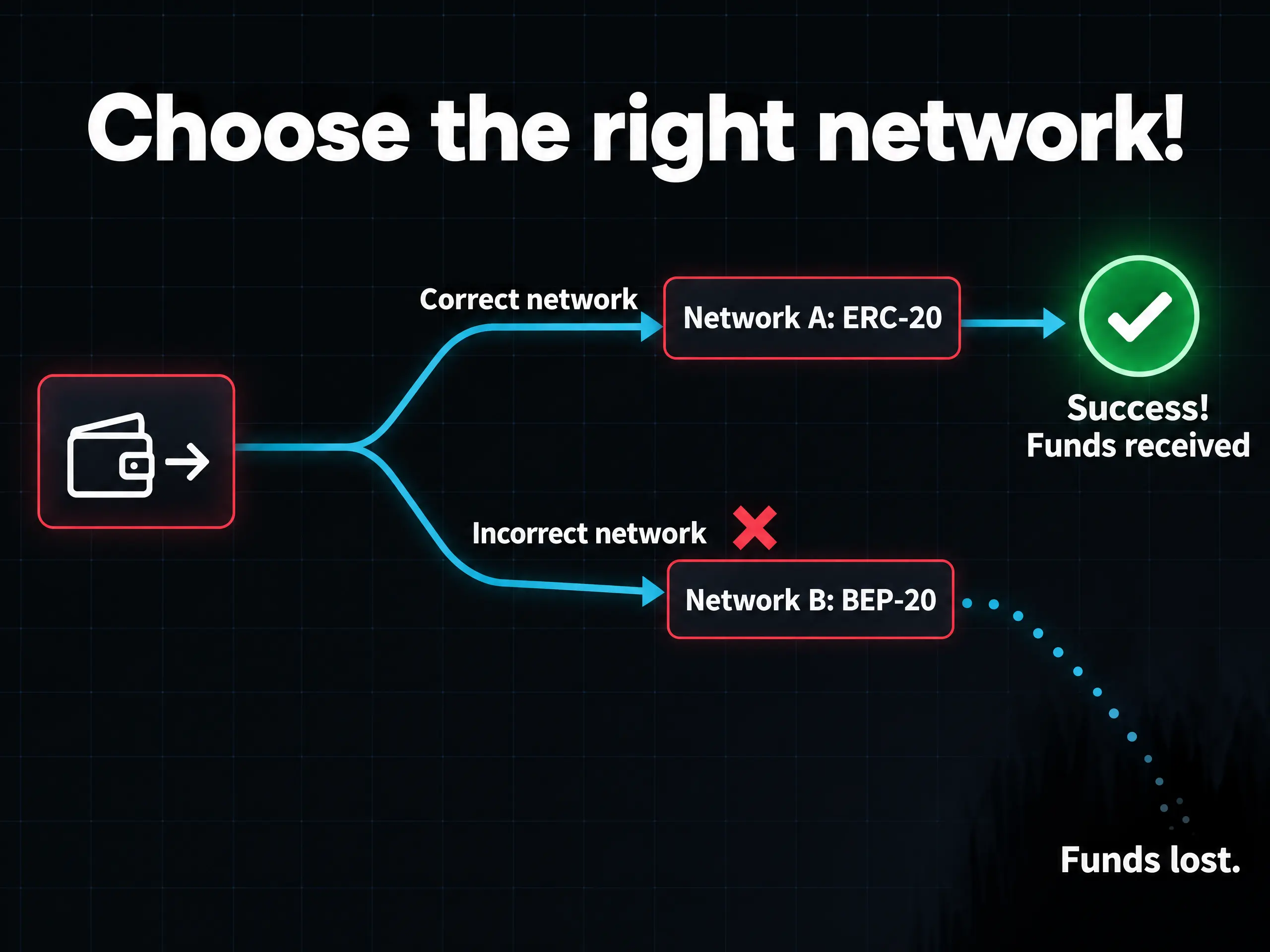
Transfer example: Sending 100 USDT via Network B to a Network A wallet can cause permanent loss of funds.
Risk mitigation guidelines for secure transfers:
- Copy and paste addresses; do not type manually.
- Verify the start and end characters of the pasted address.
- Confirm network compatibility on both ends before sending.
- Send a small test transaction first.
Stablecoin scams to watch for
Watch out for common crypto red flags:
- Urgent account warnings or fake alerts.
- Unsolicited offers promising guaranteed returns.
- Requests for passwords, 2FA codes, or recovery seed phrases.
- Phishing websites with spoofed URLs.
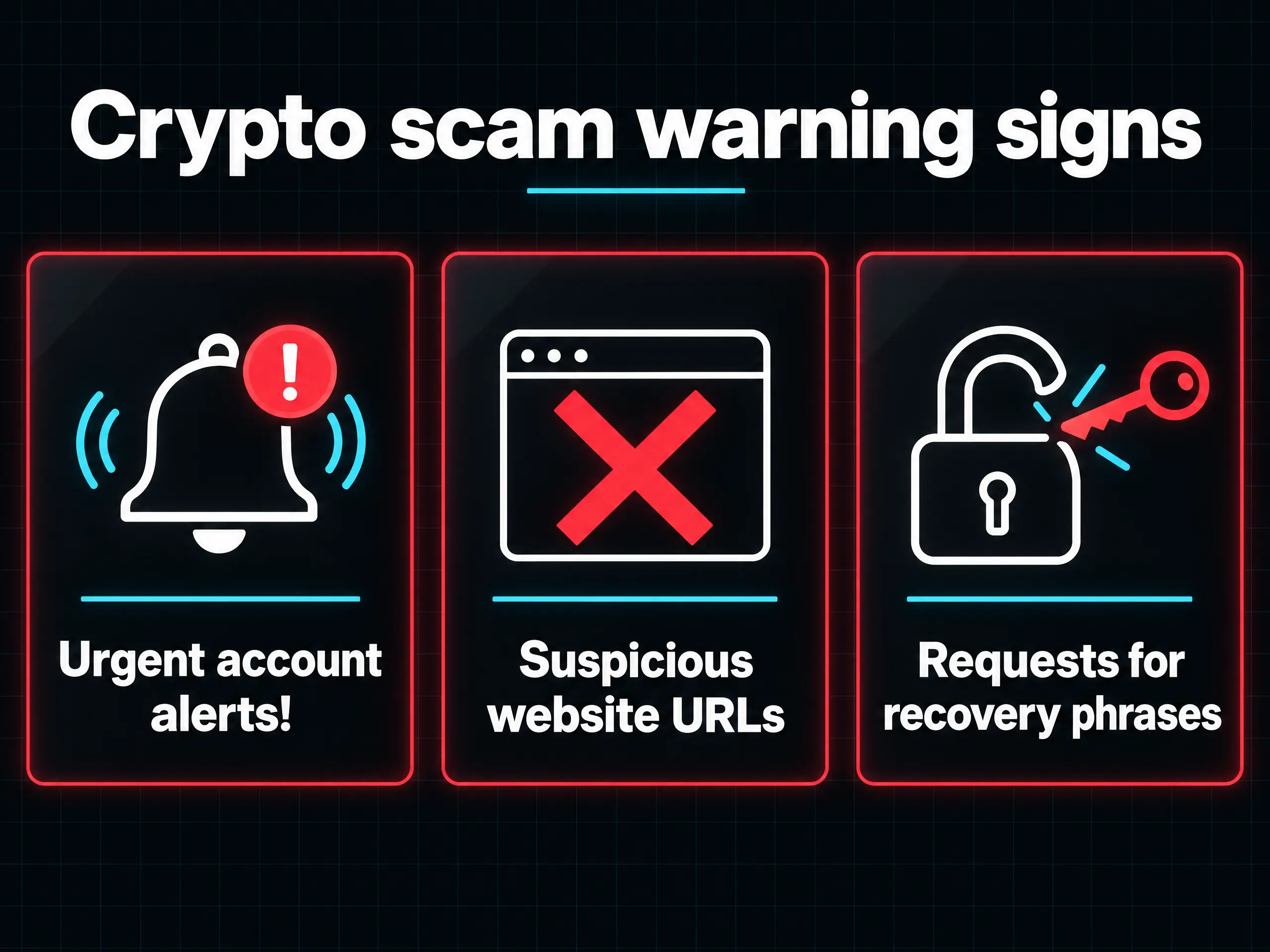
Remember: No legitimate investment offers guaranteed returns.
Questions to ask before you hold a stablecoin
Next step
Learn how spot and futures trading differ in our guide to spot vs futures vs CFDs.
Quiz
What does a stablecoin aim to do?
In the pair BTC/USDT, which is the quote currency?
You hold 100 USDT and the market price slips to 0.98 USD per USDT. What is your holding worth?
Which habit helps reduce transfer mistakes?
FAQs


