The Volatility Switch Index (VSI) is a synthetic index available on Deriv that is designed to replicate one of the most defining features of real financial markets: changing volatility conditions. Instead of maintaining a constant volatility level, VSI dynamically transitions between low, medium, and high volatility regimes, creating trading environments that resemble periods of market calm and turbulence.
This makes VSI fundamentally different from traditional Volatility Indices. Traders are not only reacting to price direction, but also adapting to shifts in volatility itself, a skill that is essential in real-world market trading. In this guide, you’ll learn what VSI is, how it works, how it differs from other Volatility Indices on Deriv, the advantages and risks of trading it, and how to get started.
Quick summary
- The Volatility Switch Index (VSI) is a Deriv synthetic index that mimics real markets by switching between low, medium, and high volatility regimes.
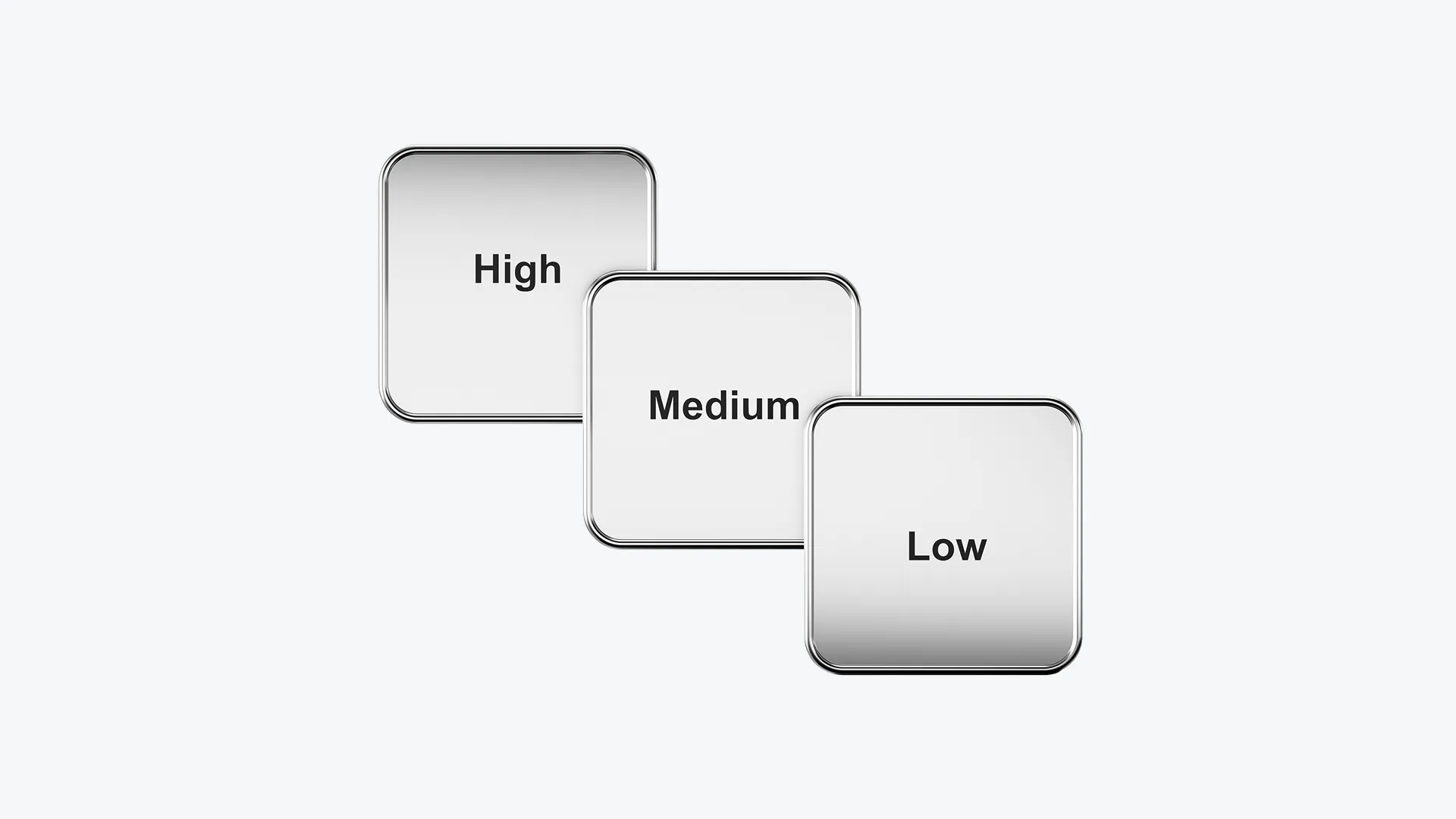
- VSI is available in three variants: VSI Low, VSI Medium, and VSI High, each with different volatility profiles and regime durations.
- Volatility regime changes occur randomly, making timing unpredictable and realistic.
- Spreads and price behaviour adjust dynamically based on the current volatility regime.
- VSI allows traders to develop strategies focused on volatility changes, not just price direction.
- The index is available 24/7 and is not affected by real-world economic events.
- Effective risk management is essential due to sudden volatility shifts.
What is the Volatility Switch Index (VSI)?
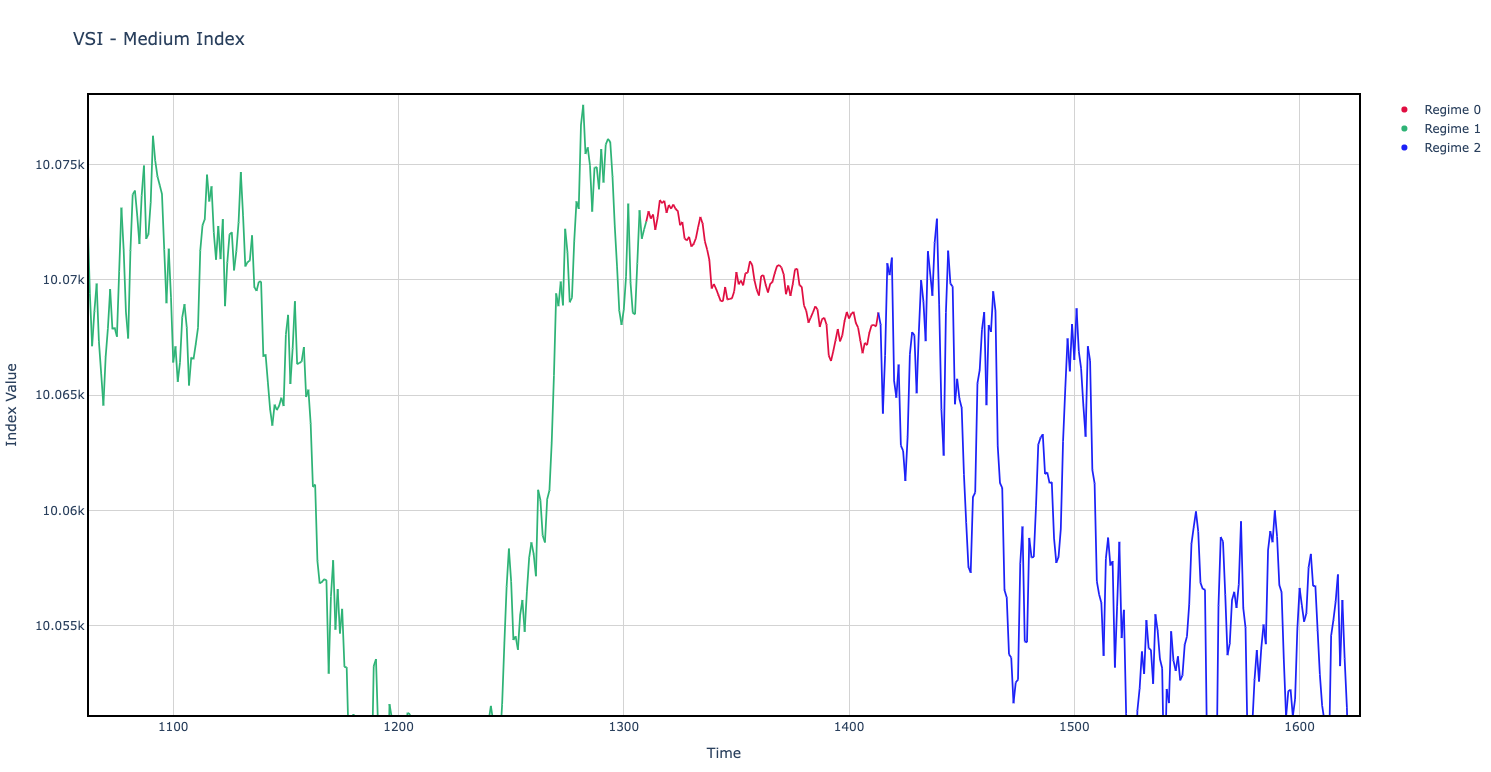
The Volatility Switch Index (VSI) is a synthetic market index that simulates how financial markets move through different volatility phases over time. Real markets rarely stay calm or volatile indefinitely. Instead, they alternate between periods of stability, moderate movement, and intense price swings.
VSI models this behaviour by randomly switching between three volatility regimes:
- Low volatility – smaller, steadier price movements
- Medium volatility – balanced movement with moderate price swings
- High volatility – faster, larger price fluctuations
Each regime lasts for a defined duration, but the timing of regime changes is unpredictable. This structure allows traders to experience how volatility expands and contracts within a single trading instrument, closely reflecting real-market dynamics.
How does the Volatility Switch Index work?
VSI operates using algorithms that control both volatility levels and regime duration. Instead of responding to news events or macroeconomic data, the index relies entirely on its internal model, ensuring continuous availability.
Volatility regimes and duration
Each volatility regime persists for a set period of time. While the duration range is known, the exact moment when the index switches to a new regime is random. This uncertainty prevents traders from predicting volatility changes with precision, reinforcing disciplined risk management.
Dynamic spreads
Unlike indices with static spreads, VSI adjusts spreads based on the current volatility regime. Higher volatility environments generally involve wider spreads, mirroring how transaction costs behave in real financial markets during turbulent periods.
VSI variants
Traders can choose between three VSI variants, each offering different volatility characteristics:
These figures help traders understand the expected intensity of price movement and how frequently volatility conditions may change.

Why volatility regime switching matters for traders
In real markets, volatility affects everything from position sizing to stop-loss placement. Sudden spikes in volatility can amplify profits, but they can also magnify losses.
By trading VSI, traders learn to:
- Recognise how price behaviour changes under different volatility conditions
- Adjust strategies as volatility expands or contracts
- Manage risk dynamically instead of relying on static assumptions
This makes VSI particularly useful for traders who want to build skills that transfer beyond synthetic indices.
Advantages of trading VSI on Deriv
Trading VSI offers several benefits compared to both real-market instruments and constant-Volatility Indices
Market-like behaviour
The alternating volatility regimes reflect how financial markets behave during calm periods, transitions, and high-impact phases. This creates a more authentic trading experience.
Strategy development and testing trading strategies
VSI allows traders to design and test strategies that respond to changing volatility environments within a single instrument. This is especially valuable for traders refining technical or algorithmic approaches.
Educational value
For traders learning how volatility influences price action, VSI provides a controlled environment to observe volatility effects without the unpredictability of external events.
24/7 accessibility
Like all Deriv synthetic indices, VSI is available around the clock and is not affected by weekends, holidays, or economic announcements.
Volatility-focused trading opportunities
Instead of trading purely on price direction, traders can focus on how volatility regimes affect entries, exits, and risk exposure.
VSI vs traditional Volatility Indices on Deriv
Traditional Volatility Indices on Deriv, such as constant-Volatility Indices, maintain a fixed volatility level over time. While this consistency can be useful, it does not reflect how volatility behaves in real markets.
VSI differs in several important ways:
- Defined volatility regimes: VSI alternates between low, medium, and high volatility instead of remaining constant.
- Realistic transitions: Regime switches introduce uncertainty similar to market shifts.
- Dynamic spreads: Transaction costs adjust to volatility conditions.
For traders seeking a more life-like market environment or testing strategies designed for changing volatility, VSI offers a more advanced alternative.
Risks and risk management when trading VSI risk management strategies
The realism of VSI also introduces higher risk if volatility is not managed properly. Traders should consider the following practices:
Prepare for sudden volatility changes
Volatility can increase without warning, leading to rapid price movements. Always assume that conditions can change unexpectedly.
Adjust position sizing
Reducing position sizes during high-volatility regimes can help limit exposure and manage drawdowns.
Use stop-loss orders
Stop-loss levels should reflect the current volatility environment. Wider stops may be necessary during high-volatility phases, while tighter stops may suit calmer conditions.
Practise on a demo account
Using a demo account allows traders to observe regime changes, test strategies, and refine risk controls without financial risk.
How to start trading the Volatility Switch Index on Deriv
Getting started with VSI is straightforward:
- Log in to your Deriv account and choose a trading platform that supports synthetic indices.
- Select VSI Low, VSI Medium, or VSI High based on your risk tolerance and strategy.
- Begin on a demo account to familiarise yourself with regime changes and price behaviour.
- Apply structured risk management before transitioning to live trading.
Focusing on observation and discipline during early trades can help traders adapt to regime-based volatility more effectively.
The Volatility Switch Index (VSI) on Deriv offers a practical way to experience and trade changing volatility conditions within a single instrument. By simulating how real markets move between calm and turbulent phases, VSI helps traders develop adaptable strategies and stronger risk awareness.
Whether you are refining technical approaches, testing algorithmic models, or building volatility-based strategies, VSI provides a structured environment to practise adaptive trading. Starting on a demo account and focusing on disciplined risk management can help you make the most of this innovative index.
Quiz
Which of the following is unique to the Volatility Switch Index (VSI) compared to traditional synthetic indices?
FAQs