Forex trading lets you speculate on currency prices forex trading basics without owning the underlying currencies. Thanks to CFDs (Contracts for Difference), you can trade with leverage, meaning you control a bigger position leverage in trading with less money upfront. Es una función poderosa, pero tiene un costo. Aquí está el asunto: dado que técnicamente estás pidiendo dinero prestado para operar, hay un costo por intereses involucrado. Ahí es donde entran los rollovers.
El trading de Forex te permite especular sobre los precios de las divisas sin poseer las divisas subyacentes. Gracias a los CFDs (Contratos por Diferencia), puedes operar con apalancamiento, lo que significa que controlas una posición más grande con menos dinero por adelantado. Es una característica poderosa, pero viene con un costo. Aquí está la realidad: dado que técnicamente estás pidiendo dinero prestado para operar, hay un costo de interés involucrado. Ahí es donde entran los rollovers.
¿Qué es un rollover en el trading de forex?
A rollover, also called a swap fee or overnight interest, is what you pay (or sometimes earn) when you keep a forex trade open overnight. Piénsalo como el costo de mantener una posición prestada.
Así es como funciona: cada par de divisas tiene su propia tasa de interés. Si la moneda que compras tiene una tasa de interés más alta que la que vendes, podrías obtener un pequeño bono (un crédito). Pero si la que vendes tiene la tasa más alta, tendrás que pagar una comisión.
Las tarifas de rollover en Forex son costos que se calculan cuando mantienes la operación abierta durante la noche. Habrá un costo total relacionado con esto.
¿Cómo se calculan las comisiones por rollover en forex?
Las comisiones de swap dependen de:
- El tamaño de tu operación (volumen)
- El tamaño del contrato (usualmente 100,000 para forex)
- El valor por punto del par de divisas
- La diferencia en la tasa de interés (tasa de swap)
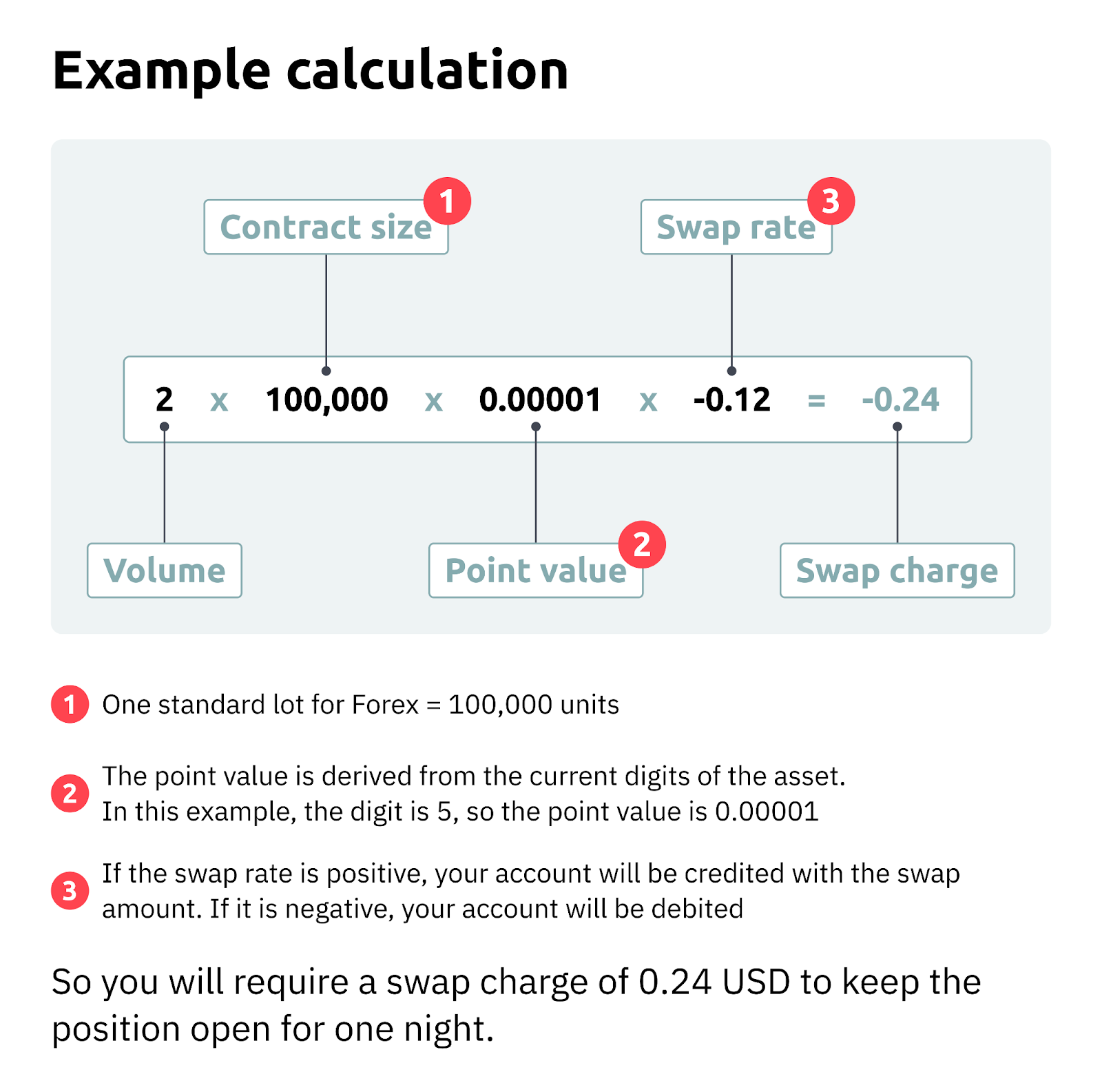
Fórmula de la comisión de swap: volumen × tamaño del contrato × valor por punto × tasa de swap
¡Hora del ejemplo! Supongamos que tienes dos lotes de EUR/USD con una tasa de swap de -0.12 durante la noche. Se te cobrará 0.24 USD. Aquí viene la parte importante: los miércoles, los brokers triplican la comisión para cubrir el fin de semana, por lo que en lugar de 0.24 USD, estarías pagando 0.72 USD.
¿Quieres consultar las tasas de swap exactas para tus pares de forex favoritos? Check Deriv's trading specifications page.
¿Qué es un rollover en el trading de Forex?
Cómo administrar las comisiones por rollover en forex como un profesional
Algunos traders en realidad usan las comisiones por rollover a su favor. ¿Cómo? By trading currency pairs with positive interest rate differentials (like USD/JPY), they earn swap fees instead of paying them. Pero antes de emocionarte demasiado, ten en cuenta que estas operaciones pueden ser concurridas y volátiles.
Si prefieres evitar por completo las comisiones por rollover, aquí tienes un truco simple: cierra tus operaciones antes de la hora diaria de rollover. Y definitivamente presta atención a los miércoles cuando la comisión se triplica.
¿Quieres operar sin comisiones por rollover?
Deriv offers swap-free MT5 accounts, which follow Islamic finance principles-meaning no interest charges at all.
Las tarifas de rollover dependen de una serie de factores que incluyen el tamaño de la operación.
Cuestionario
What primarily affects forex rollover fees?
Preguntas frecuentes