
الأسواق الحقيقية ترتفع وتنخفض وتغيّر اتجاهاتها. تلتقط مؤشرات Crash وBoom التقليدية الحالتين الأوليين: حركة تدريجية منتظمة تتخللها انخفاضات أو ارتفاعات مفاجئة، غير أن كلاً منهما يلتزم باتجاه واحد ثابت على الدوام. يرتفع Crash Index دائماً بين انخفاضاته المفاجئة؛ في حين ينخفض Boom Index دائماً بين ارتفاعاته المفاجئة. تُضيف مؤشرات Crash Boom Flip الحالة الثالثة: الانعكاس. مع الإطلاق الأخير لـ Flip Indices، أصبح بإمكان المتداولين الوصول إلى أسواق ديناميكية تنتقل بسلاسة بين هذه المراحل.
ما هي Crash Boom Flip Indices؟
يتناوب مؤشر Crash Boom Flip (Flip) بين مرحلتين. في مرحلة Crash، يرتفع المؤشر بخطوات صغيرة مع احتمال حدوث انخفاض مفاجئ. في مرحلة Boom، ينخفض المؤشر بخطوات صغيرة مع احتمال حدوث ارتفاع مفاجئ. في المتوسط، تحدث حركة كبيرة واحدة كل 150 أو 300 أو 500 أو 1,000 تيك، وذلك وفقاً للمتغير الذي تختاره. كما يمكن أن تكون أي حركة كبيرة هي اللحظة التي يغير فيها المؤشر طابعه، إذ تنتهي مرحلة الصعود البطيء وتبدأ مرحلة الهبوط البطيء، أو العكس بالعكس.
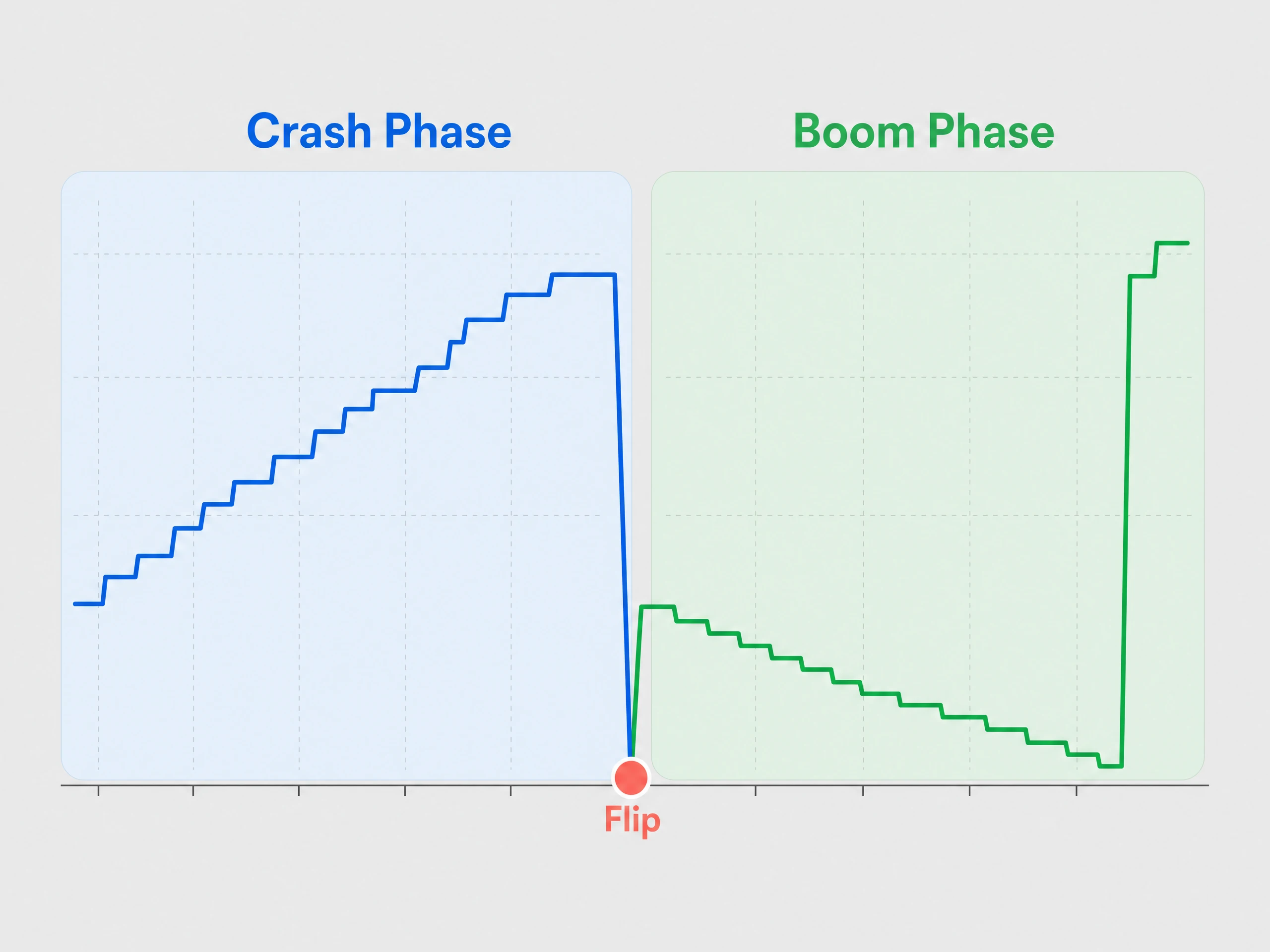
هذه الطبيعة غير المتوقعة مدمجة في تصميم المؤشر عن قصد. كسائر Deriv Synthetic Indices، تتوفر مؤشرات Flip للتداول على مدار الساعة طوال أيام الأسبوع (24/7)، وتعمل بمولّد أرقام عشوائية آمن يجعلها بمنأى عن أوقات السوق والأحداث الإخبارية والسيولة الفعلية.
كيفية تصرفها
- بين التحركات الكبيرة، يتحرك السعر بثبات في اتجاه المرحلة الحالية: صعوداً في Crash، وهبوطاً في Boom.
- يصل التحرك الكبير في المتوسط مرة واحدة كل N نقطة (تيك)، حيث N هو الرقم الوارد في اسم المؤشر. المتوسط ليس عدًّا تنازلياً: فالتحركات الكبيرة تتجمع وتتباعد بصورة غير متوقعة.
.webp)
- قد يؤدي أي تحرك كبير إلى قلب المرحلة. بعض الانخفاضات تنهي الصعود وتفتح مرحلة تراجع، بينما يتم امتصاص انخفاضات أخرى ويستأنف الصعود. يمكنك معرفة ما حدث من خلال ما إذا كان الاتجاه التدريجي يغير مساره.
- كلا الاتجاهين موجودان على مخطط واحد. على عكس مؤشر Crash أو Boom الكلاسيكي، يُنتج الرمز ذاته انخفاضات مفاجئة وارتفاعات مفاجئة على مر الزمن.
التشكيلة
| الفهرس | تحركات كبيرة | الطابع |
|---|---|---|
| Crash Boom Flip 150 | بمعدل 1 كل 150 نقطة سعرية | الأسرع: مراحل قصيرة ونقاط تحول متكررة |
| Crash Boom Flip 300 | بمعدل 1 كل 300 نقطة سعرية | تحركات كبيرة متكررة مع إمكانية تشكّل الاتجاهات |
| Crash Boom Flip 500 | بمعدل 1 كل 500 نقطة سعرية | متوازن: اتجاهات واضحة ونقاط تحول منتظمة |
| Crash Boom Flip 1000 | بمعدل 1 كل 1,000 نقطة سعرية | الأبطأ: أطول المراحل وأكثرها استقراراً |
Flip مقابل Crash and Boom الكلاسيكي
| Classic Crash / Boom | Crash Boom Flip | |
|---|---|---|
| اتجاه الترند | ثابت بشكل دائم: صعود (crash) أو هبوط (boom) | يتناوب بين الاتجاهين |
| تحركات كبيرة | اتجاه واحد فقط: هبوط أو ارتفاع مفاجئ | كلا الهبوط والارتفاع المفاجئ بمرور الوقت |
| ما يعنيه التحرك الكبير | توقف مؤقت في الاتجاه | توقف مؤقت أو نقطة تحول |
يوضح الجدول أعلاه آلية العمل؛ وعملياً، يتلخص الأمر في هذا: إذا كان Crash Index الكلاسيكي سوقاً لا يفعل سوى التصحيح، فإن Flip Index هو سوق ذو دورة كاملة تشمل: التراكم، والكسر، والتوزيع، والكسر. هذا ما يجعله البيئة الأكثر ملاءمةً طبيعياً للاستراتيجيات المبنية على الانعكاسات بدلاً من الاستمرارية.
ما يعنيه ذلك لتداولك
يحصل متداولو الاتجاه على مراحل محددة بوضوح للعمل معها، إذ يُظهر اتجاه الحركة التدريجية أي النظامين ساري المفعول. في المقابل، يحصل متداولو الانعكاس على نقاط تحوّل مرتبطة بأحداث مرئية، بدلاً من تلك التي تظهر في صمت دون إنذار. أما متداولو الارتفاعات المفاجئة، فلم يعودوا بحاجة إلى الاختيار بين رمز Crash ورمز Boom. أداة واحدة تنتج كليهما.
بصرف النظر عن الأسلوب، تظل الانضباطية واحدة كما هي في كل Synthetic Index: توقيت أي تحرك كبير منفرد هو أمر عشوائي. يصف رقم المتغير متوسطاً طويل الأمد، لذا لا يمكن لأي عدد من التكات أن يخبرك متى ستصل الحركة التالية أو الانعكاس التالي. يكتسب تحديد حجم المركز ووضع أوامر الإيقاف هنا نفس القدر من الأهمية تماماً كما هو الحال في مؤشرات Crash وBoom الكلاسيكية.
كيفية تداول مؤشرات Crash Boom Flip
تتوفر مؤشرات Crash Boom Flip كـCFDs على Deriv MT5 وDeriv cTrader. إذا كنت جديداً في هذه العائلة، فإن حساب Deriv التجريبي يتيح لك مراقبة المؤشر وهو يرتفع وينخفض ويغير اتجاهه، واختبار استراتيجيتك بأموال افتراضية قبل التداول الفعلي. يمكنك أيضاً التعرف على كيفية تداولها على Deriv MT5.
اختبار
الأسئلة الشائعة


