
Trading is all about making smart decisions trading strategies, and the risk-reward ratio is your secret weapon for stacking the odds in your favour. It’s a simple way to compare what you’re putting on the line (risk) versus what you stand to gain (reward). Get this balance right, and you’ll trade smarter, not harder.
What exactly is the risk-reward ratio?
Think of it like this: If you’re betting $10 to make $30, your risk-reward ratio is 1:3. That means for every dollar you risk, you’re aiming to make three. The goal? Make sure your potential wins are always bigger than your possible losses.
Managing risk: How much are you willing to lose? stop loss
Risk is the amount you’re comfortable losing on a trade. That’s where a stop-loss comes in. It’s your safety net-an automatic exit if the trade moves against you. Setting it in advance helps you avoid emotional, last-minute decisions that can derail your trading strategy.
Chasing rewards: What’s your target profit?
Your reward is the profit you’re aiming for, usually set with a take-profit level. This is where you lock in gains and call it a win. The trick is to aim for a realistic target-big enough to be worth it, but not so ambitious that it rarely happens.
How to calculate the risk-reward ratio
It’s as easy as:
Risk-reward ratio = potential reward / potential risk
Let’s say you buy EUR/USD at 1.0750. You set your stop-loss at 1.0725 (risking 25 pips) and your take-profit at 1.0850 (gaining 100 pips). Your risk-reward ratio? 1:4. That means you're aiming for four times the profit compared to your risk.
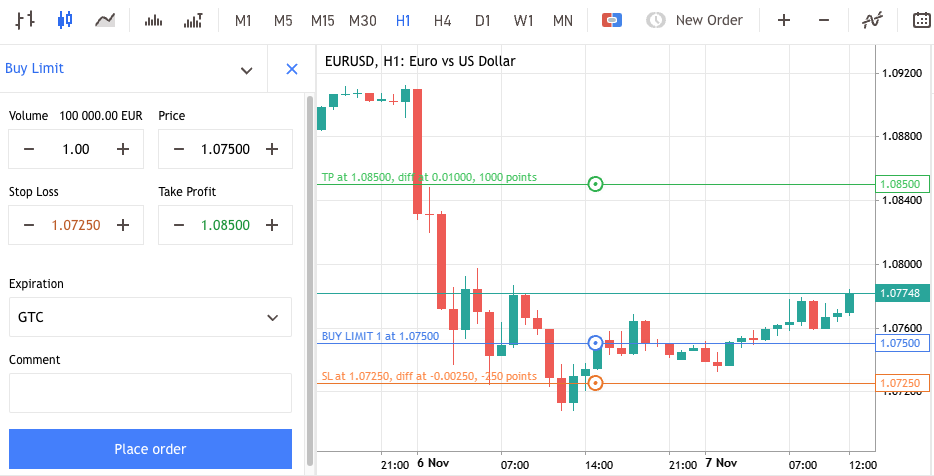
| Trade Entry | Stop-Loss | Take-Profit | Risk (pips) | Reward (pips) | Risk-Reward Ratio |
|---|---|---|---|---|---|
| 1.0750 | 1.0725 | 1.0850 | 25 | 100 | 1:4 |
Is a higher risk-reward ratio always better?
Not necessarily. Aiming for a 1:3 or 1:4 ratio sounds great, but the higher the ratio, the lower your win rate might be. It’s all about balance, which means matching your ratio with your overall strategy and how often you win trades.
Adapting to different market conditions
Markets shift constatntly. Your strategy should, too. In volatile conditions, a more conservative approach might be better, keeping risks smaller. In calmer markets, you might take on a bit more risk to squeeze out better returns. Stay flexible.
The risk-reward ratio is a powerful tool, but it’s not the only thing that matters. Pair it with good risk management, smart position sizing, and a solid trading plan. Over time, this will help you trade with confidence and consistency.
Ready to try it out?
Open a free demo trading account today and test out different risk-reward strategies for yourself.
Questionário
Se você arrisca $20 para potencialmente ganhar $60, qual é a sua razão de risco-recompensa?
Perguntas frequentes


.png)